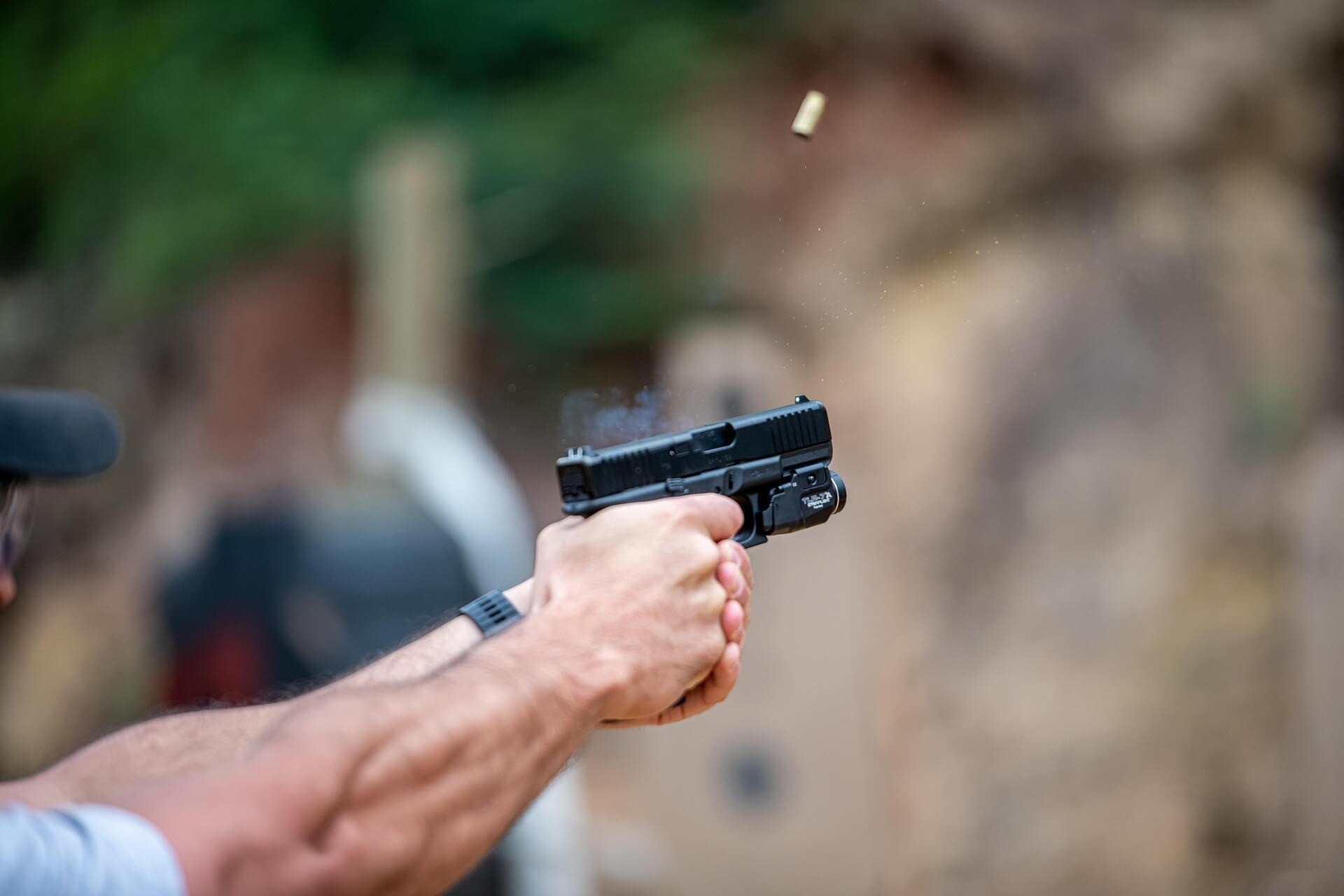
- Guns are powered by either the user or ammunition
- Manual-operated guns include revolvers, pump action, bolt action, and lever action
- Gas-operated guns work with direct impingement, pistons, or other methods
- Some guns use direct blowback systems
Despite firearms being almost everywhere in media and entertainment, there is still a question that some people need to ask. “How does a gun work?” This can be for genuine curiosity or basic firearms safety.
Knowing how a gun works will help you work with them more effectively and handle them appropriately. So we are going to start with how guns and ammunition work together and then move on to how guns operate. Keep in mind that this will be dealing with cartridge firearms specifically.
Guns and Ammunition
No matter which style of firearm it is, a gun will be designed to fire a projectile of some kind. This projectile or projectiles will be in a case or a shell that contains a propellant and a means of detonation.
Whether it is with a firing pin, a striker, or something similar, the primer will be hit and cause a detonation. This is what happens when a gun fires.
Some guns will allow for a new cartridge/shell to be moved into position for firing. These are broken up into two major categories: guns driven by the user and guns driven by the ammunition.
User-Driven Guns: Manual-Operated Firearms
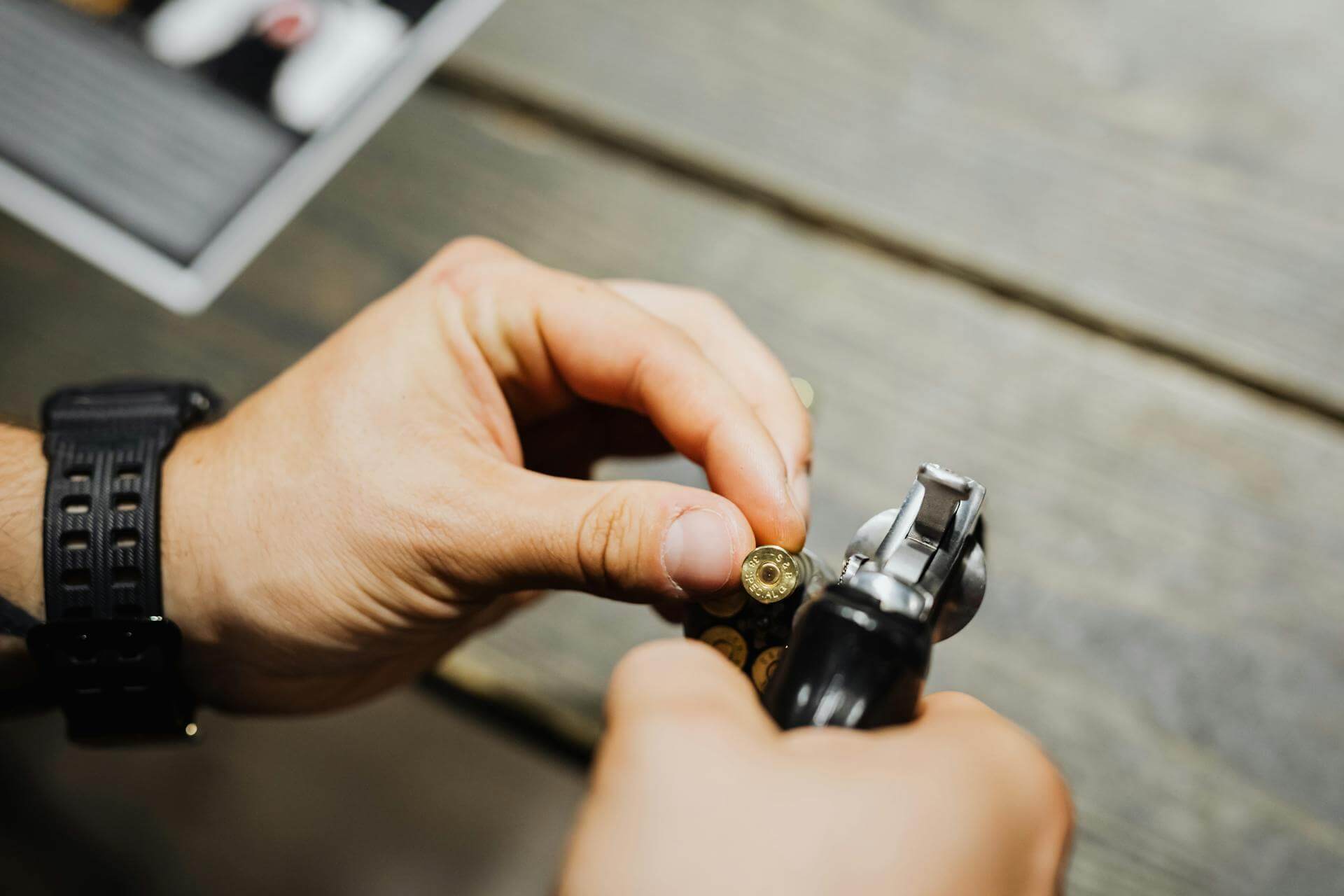
How does a manual gun work? It works by the effort put into it by the user. This means that as long as it can be operated by the user, another round can be put into play (barring a malfunction).
Revolvers
A revolver is the most commonly recognized manually operated gun. A lot of revolvers today have a double-action feature where the cylinder is rotated by pulling the trigger. This powers the gun’s cylinder rotation and firing cycle.
Some revolvers even need the user to pull the hammer back in order to ready the gun and turn the cylinder.
Rifles and Shotguns
Pump actions, cowboy guns, and bolt-action hunting rifles are some of the best examples of manually operated guns that are not handguns. There are a lot of different styles that fall under this category, so here’s a quick table of them.
| Manual Action Style | Gun Type: |
| Bolt Action | Rifles, some shotguns |
| Pump Action | Shotguns, some rifles |
| Lever Action | Rifles, some shotguns |
| Break Action | Rifles and shotguns |
Ammunition-Driven Guns: Semi-Automatics
How does a gun work that is powered by its ammunition? It takes either some of the leftover energy from the round firing or some of the gases from the propellant and uses that to cycle the gun.
These are (largely) divided into three styles: direct blowback, recoil-operated, and gas-operated guns. These styles of guns are usually considered semi-automatics, especially in the civilian market.
Direct Blowback Guns
Guns that use the excess energy from the cartridge firing to cycle the gun are referred to as direct blowback guns. This is because the case is pushed backwards by the propellant detonating directly backwards.
This is commonly found in pistol-caliber firearms. The reason for this is safety. Too much excess energy and the gun can break, or the gun will be too heavy with its components to be practical. A lot of direct blowback designs were made in the late 1800s and early 1900s.
Recoil-Operated Guns
Most modern handguns are some form of recoil-operated design. While it is not exclusive to handguns, it works similarly to blowback firearms, but with the added aspect of a locking system helping to tame the energy powering the gun.
This allows for more powerful cartridges and is why you see things like .45 ACP and rifle calibers using this method of operation.
Gas Operated Guns
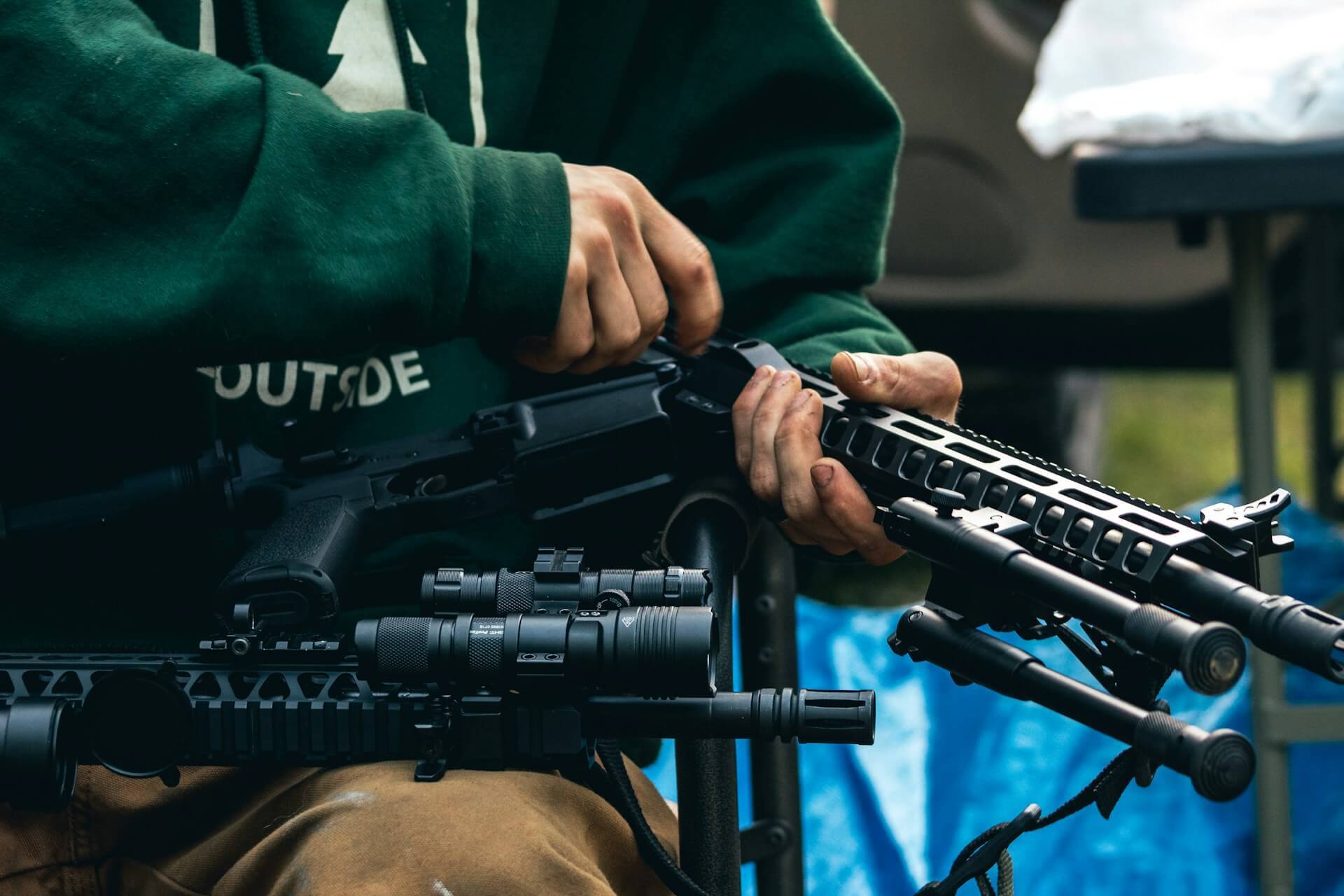
When it comes to semi-automatics, most people are familiar with gas-operated guns. These types of guns are some of the most common on the market and take the form of things like AR-15s, AKs, and other magazine-fed rifles.
Direct Impingement
While most systems are not the textbook definition of direct impingement, we will use it to stand in as a description of things like AR-15 parts that operate the rifle. Essentially, this is a series of tubes that divert gas to come back and push on the bolt carrier.
The modern rendition is commonly found on AR pattern variants and other designs that have been developed since the 1950s.
Piston Operated
A piston-operated firearm is a little more hands-on in its cycling approach. It still diverts gases, but these work on a piston that is directly attached to the bolt carrier. This is easily seen in AK-47 parts since it is one of the most popular piston systems in the world.
Piston-operated guns are considered to have greater longevity than direct impingement, but this largely comes down to use and cleaning. However, piston systems tend to last longer overall.
Roller Delayed
While not unique to German designs, roller-delayed systems are often found in German firearms. These work similarly to recoil-operated guns, but instead of a fixed locking surface, two rollers apply the necessary pressure to hold the gun closed until the pressures become safe enough for the gun to cycle.
These tend to be very finicky in their cleaning while being very reliable and extremely cool. However, as time goes on, this system has been replaced by either direct impingement or piston operated designs.
Conclusion
We obviously cannot cover every single firearm and how it works in one article. This is just a quick overview so you can get an idea of how each works, select one, and deep dive on your own.
Whether you are looking for Glock parts or other items, feel free to check our available inventory at Wing Tactical or contact us directly.