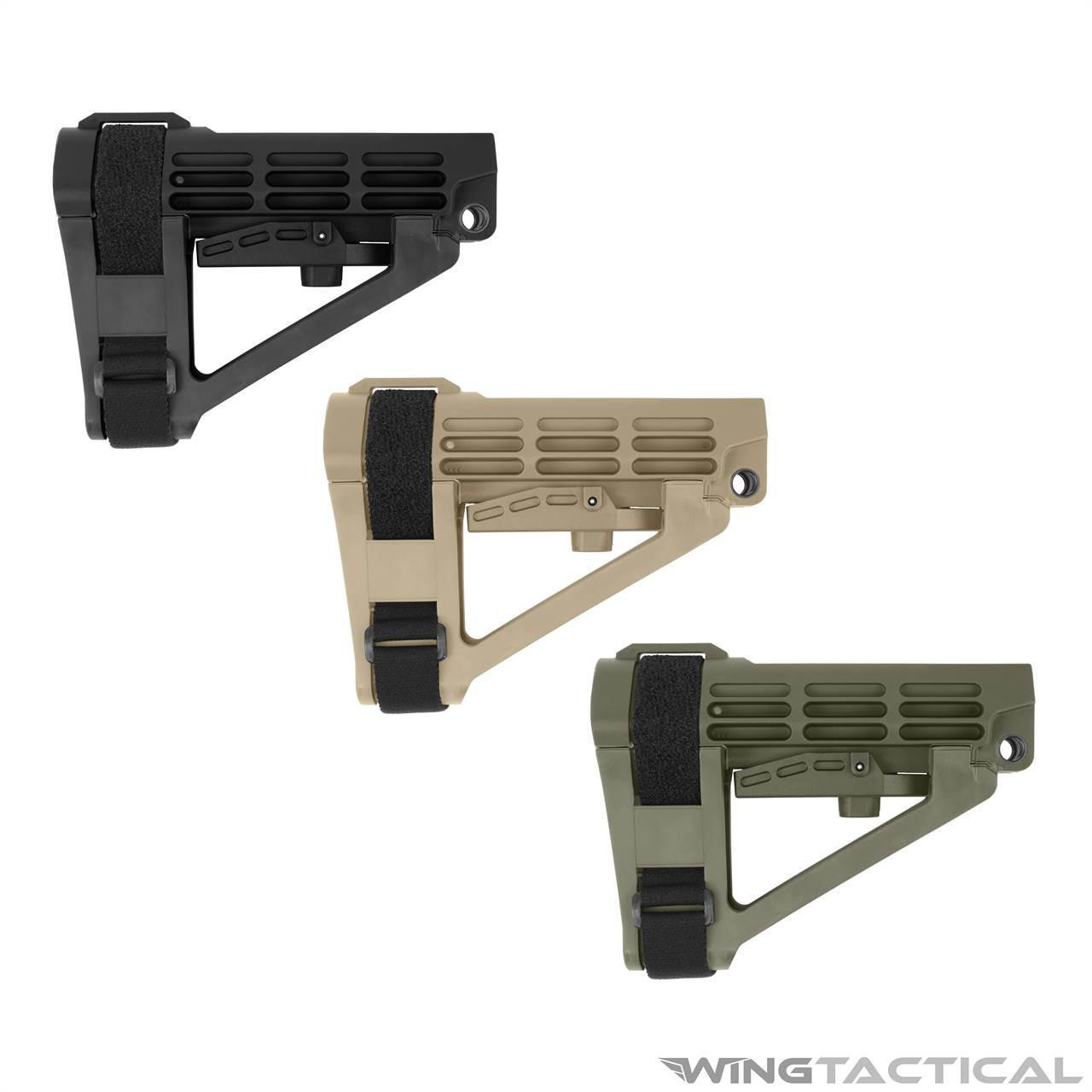
- Pistol braces are designed to aid in firing larger form pistols with one hand
- Pistol braces are available in collapsible, folding, and fixed configurations.
- Braced pistols can include AR pistols, AK pistols, or other designs.
- Pistol braces provide stability through straps or physical pressure.
There are many accessories and parts in the firearms market, and some of them come with more questions than answers. Some of these accessories include pistol braces. What is a pistol brace? And how does it compare to more traditional rifle stocks?
The answer is fairly straightforward, but you don’t know what you don’t know. Wing Tactical aims to keep you informed about different accessories so you can choose the right options for you. So let’s get into the question.
What is a Pistol Brace?
A pistol brace is an alternative control for larger-form pistols, specifically AR and AK pistols. Most early designs were made to work with the buffer tube of an AR-15 with the goal of allowing those who may be in a wheelchair or who have some other disability to still use a firearm for self-defense.
This led to a significant increase in market share, as the designs enabled more compact firearms with better control and effectiveness than smaller-form pistols.
Pistol Brace Vs Stock
The difference between a pistol brace and a stock comes down primarily to function. Pistol braces are designed for single-handed use. These braces allow those with disabilities to still hold and use an AR or AK pistol even if they only have one strong hand.
Stocks are designed for use in traditional rifle positions, providing a third point of contact to help control the gun for better accuracy at distance. Some will also serve other utility purposes, such as extra storage space.
What Styles of Pistol Braces Are There?
There are three major variations of pistol brace: standard braces, folding braces, and PDW (Personal Defense Weapon) braces. Each has its own benefits and purposes, but they largely work off two methods of stability: straps or pressure.
Traditional Braces
Traditional braces use a strap or similar tie-down to secure the brace to the user’s forearm. This allows large AR and AK pistols to be used one-handed. These will include a section of the brace that is contoured for a comfortable fit.
Hook/Stabilizer Brace
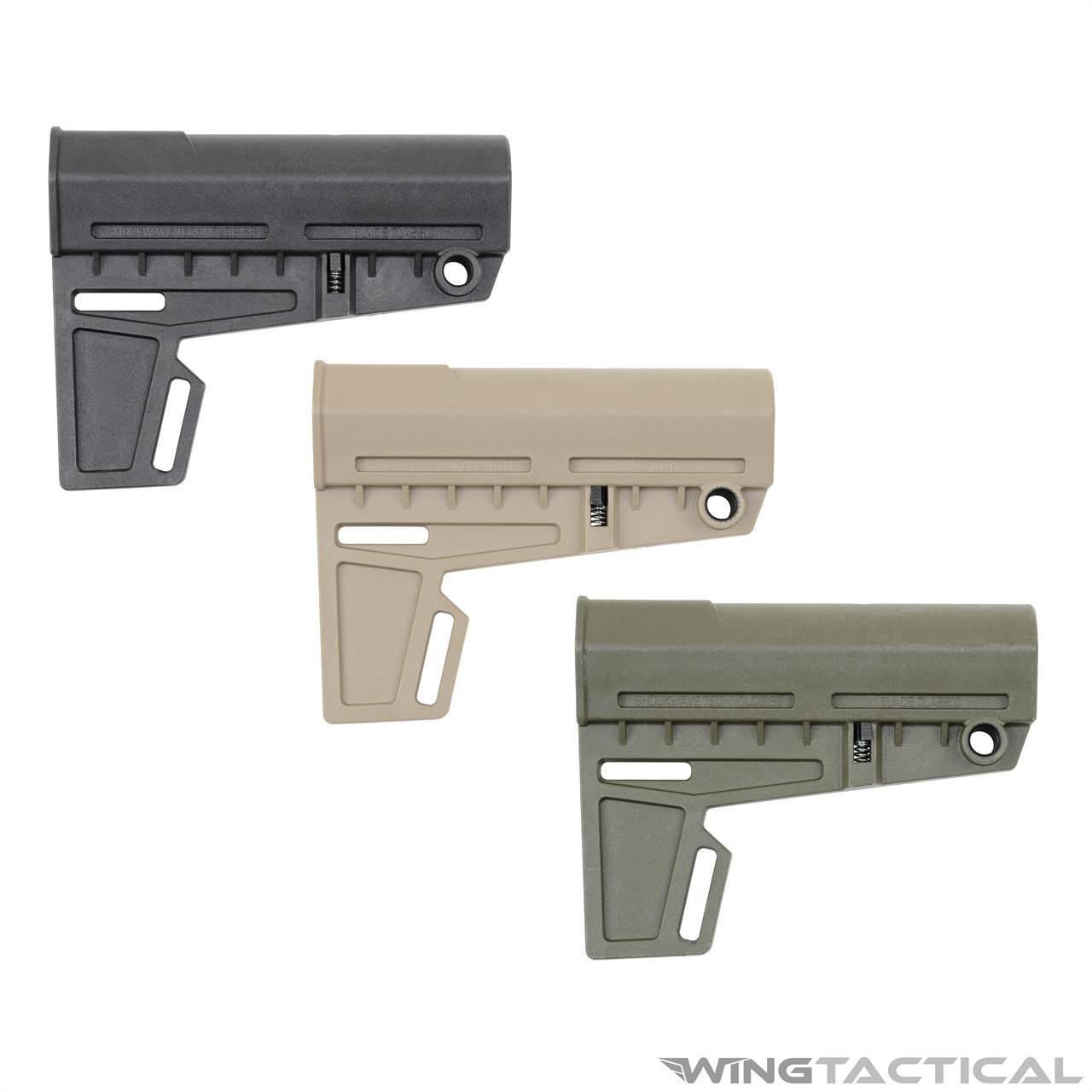 Hook or stabilizer braces apply pressure to secure the brace. These styles do not use a strap to secure the brace to the user’s arm, but instead use a “hook” or angle to push the brace into the user’s forearm.
This counterbalances the gun by using the heavier forend to pull the brace into the arm, creating better stability and control. This style is easier to remove but less secure than versions with a strap.
Standard Brace
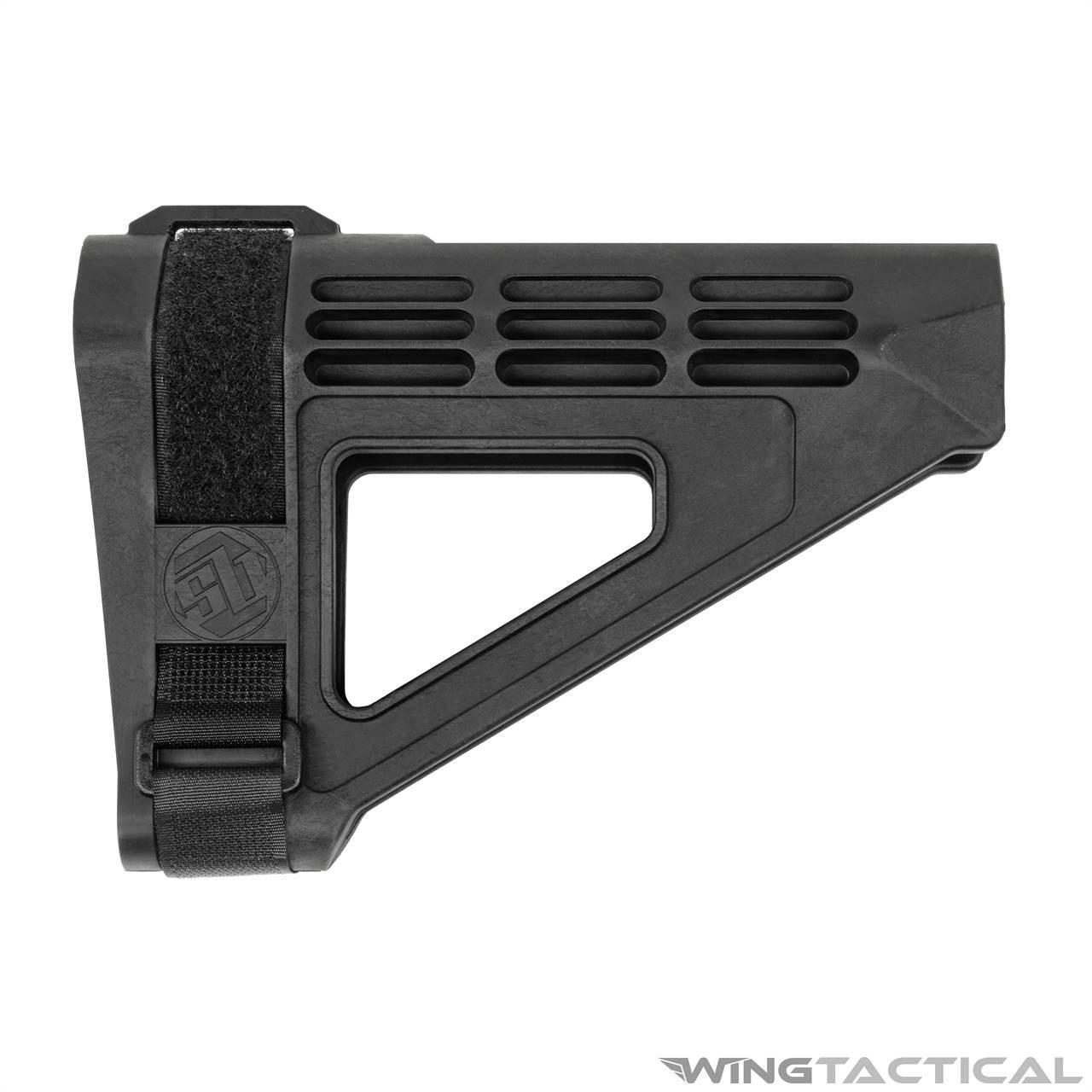
A standard pistol brace can look very similar to a “normal” stock with the addition of the retaining strap. This makes it easier to pair with AR pistol buffer tubes while providing the one-handed stability that braces are known for.
These are some of the more common brace designs and share similar collapsibility to normal rifle stocks when it comes to using a standard buffer tube.
Folding Brace
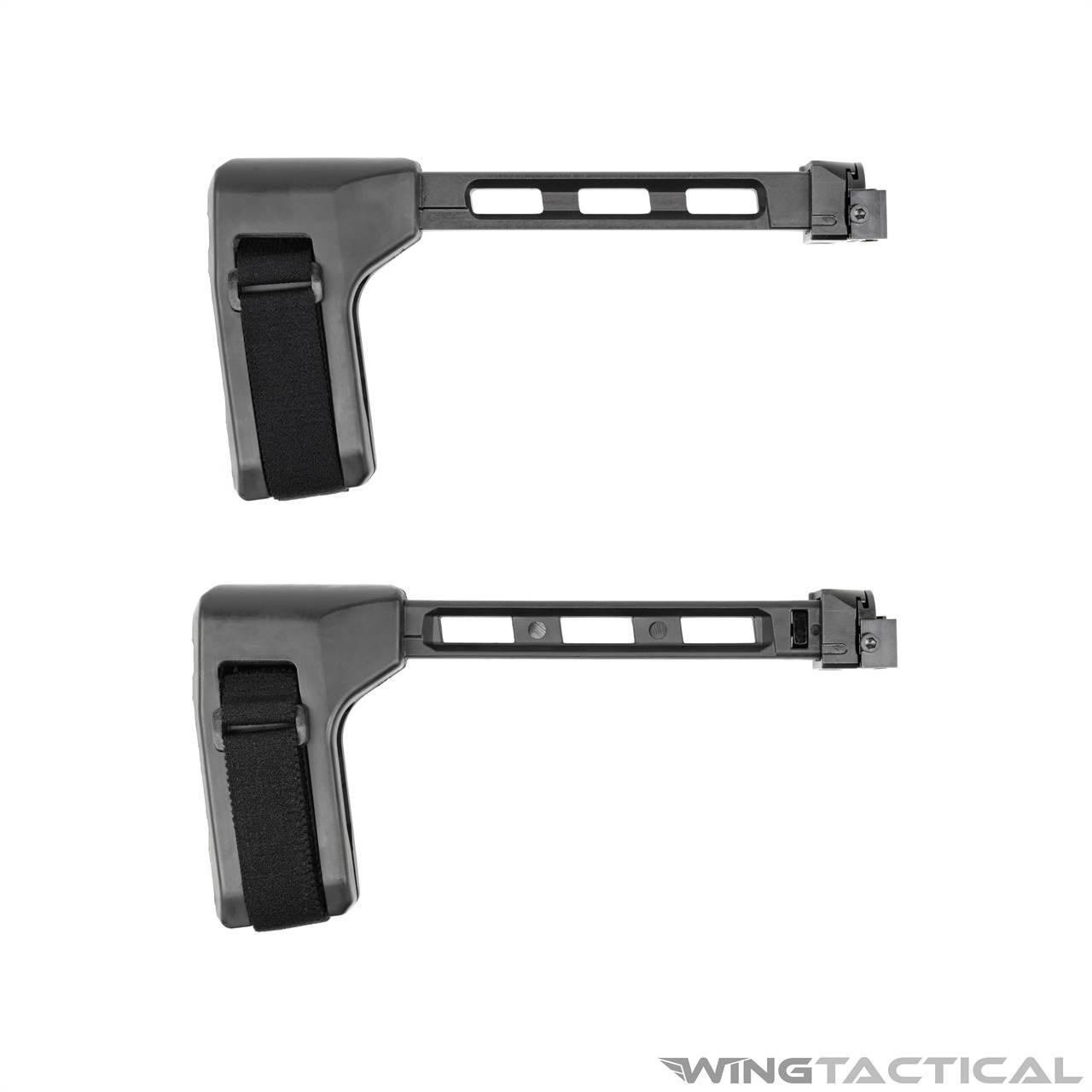
If you are using a non-standard AR recoil system or another platform that does not have an extended buffer tube, a side-folding pistol brace is a great choice for a compact firearm. These braces fold to the side of the receiver, creating a slightly thicker cross-section, but they are often not large enough to be an issue.
A folding brace is a niche style of brace, as it pairs better with non-AR-pattern platforms and provides extra stability, especially for more 9 mm-focused options like the SIG MPX.
PDW Brace
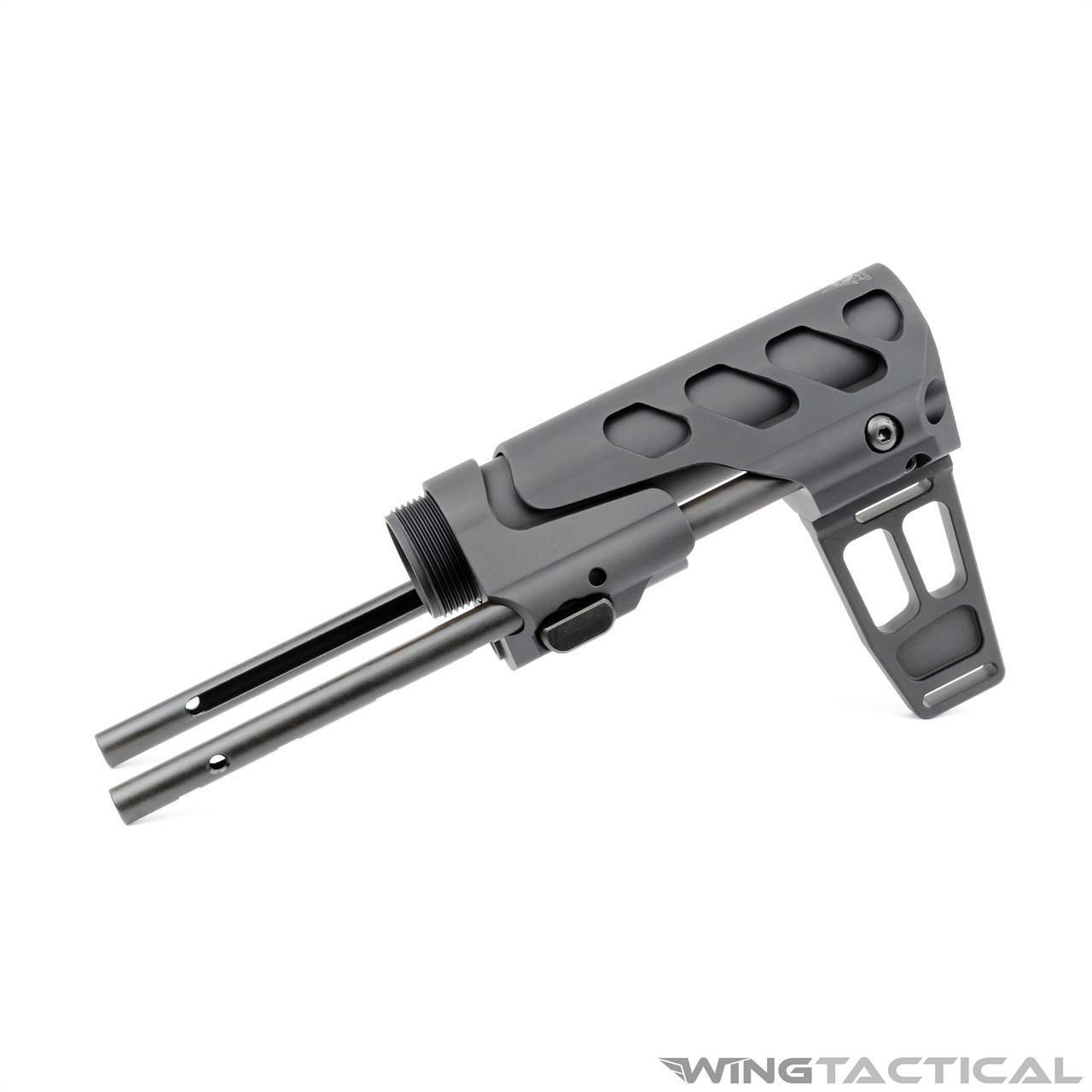
A PDW-style pistol brace generally features two projections on either side of the AR pistol’s receiver. This allows the brace to collapse linearly, resulting in a more compact AR pistol. This style mirrors some MP5 stock variants in how it handles extra length. But with the functionality of an AR buffer tube.
PDW braces maintain an even distribution of the brace on both sides of the firearm, unlike folding braces, which add extensions to one side of the receiver. This is important if you want a consistent profile for your AR pistol. They are a good alternative to more fixed brace styles.
Pistol Brace Vs Stock: Should You Use A Pistol Brace?
When it comes to accuracy, stability is the name of the game. A full-sized rifle with a rifle stock is going to provide better stability in dynamic situations. This is the reason why rifle stocks are designed the way they are. However, they are longer overall than AR pistols.
While AR pistols can be fired accurately without a pistol brace installed, it is easier to use AR pistols with a brace because of the better stability that the brace provides. It is the compromise between an easier-to-shoot rifle and having an extremely compact firearm.
Whether you use one depends on your needs and preferences. If you want a compact self-defense tool, an AR pistol with a brace may be what you need. But if you need a general rifle, you have other options. If you’re unsure of your needs, contact us today to speak with our experts.
DISCLAIMER:
*Know your local/state laws and regulations before purchase. If you are unsure whether or not you have an assault weapon, please contact a firearms attorney. Wing Tactical LLC is not held responsible for injury or damage from inaccurate assembly, misuse, illegal use, or modification of this device, nor are we held responsible for your understanding or interpretation of the laws and regulations that may apply.