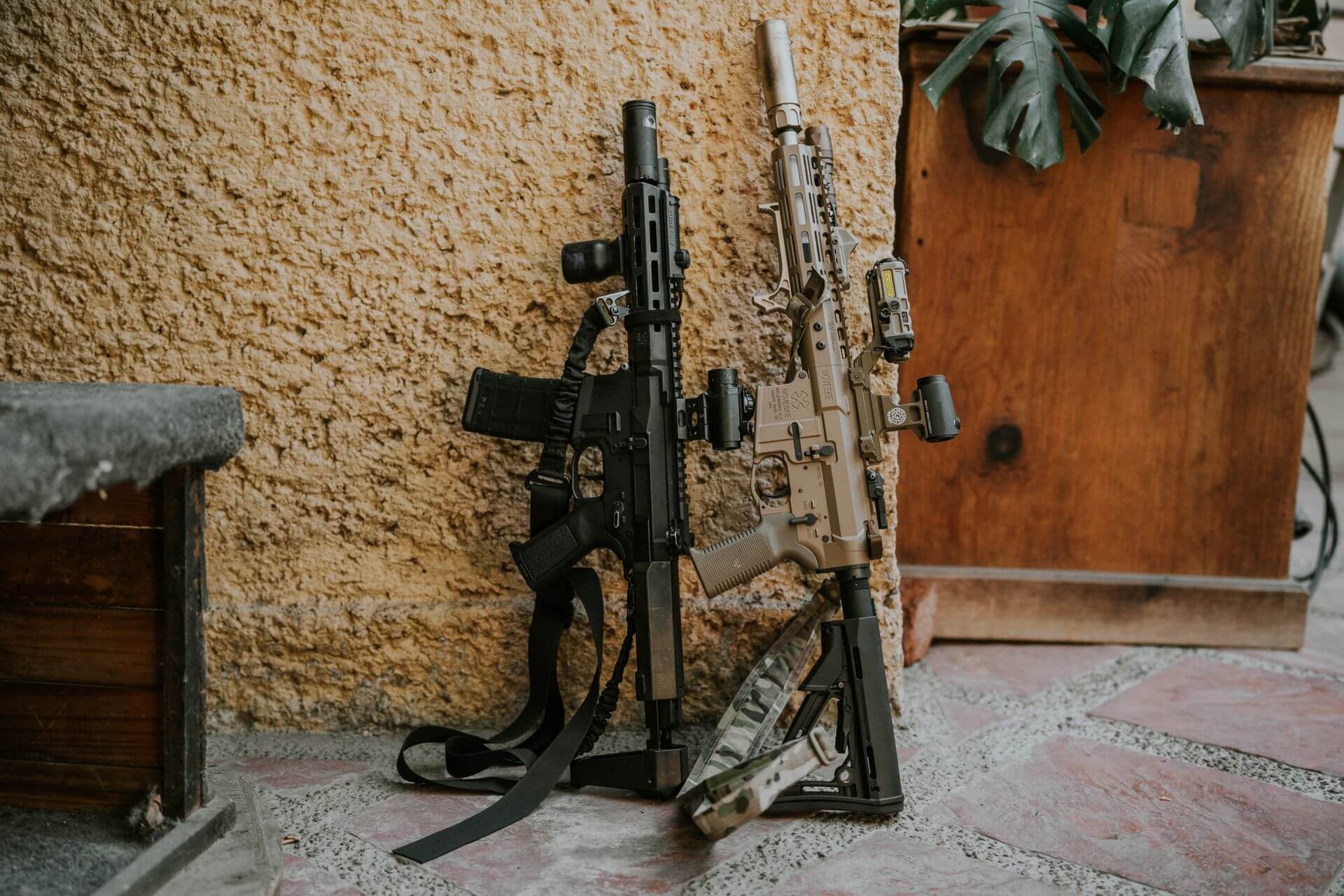
- Handstops give a physical reference for hand placement
- Foregrips help apply pressure to the gun for better control
- Handstops and foregrips share similar uses but are not 100% the same
- Handstops tend to be smaller overall compared to foregrips
A less common topic in firearms optimization is handstop vs foregrip. This is because it lacks the “cool factor” that sights, lights, and lasers have. But it is still important to know what these two accessories offer you in terms of performance.
We are going to cover the differences between these attachment styles, the different styles they come in, and how these variations impact you.
What Is The Difference Between A Handstop And A Foregrip On An AR-15?
The primary difference between a handstop and a foregrip is intent. A handstop is designed to give you a physical reference of where your hand is supposed to go on the rifle. This helps with consistency, which is important under stress and in low-light environments.
Foregrips are designed to give you more grip surface to the front of your rifle so you can control your muzzle orientation better. This can help you pull the rifle into your shoulder more easily, or just give you somewhere to grab when there are so many accessories on your rail.
How Foregrips Work
AR-15 foregrips were originally designed to work with 20-inch barrels on the M16. They provided a more neutral hand placement for holding the rifle up for extended periods. This would evolve into the foregrip being an anchor point for better control.
Foregrips let you have less stress on your support arm when you are not actively pulling the gun into you while making it more comfortable to pull the rifle. This is especially important on rifles with shorter handguards.
- Allows you to pull the rifle to you
- Provides more grip surface
- Provides better wrist ergonomics
Foregrip Variants: Vertical and Angled
You will find two major variations of a foregrip: vertical and angled grips. Each focuses on providing a good grip surface; they just go about it differently.
1. Vertical Foregrip: Classic Performance
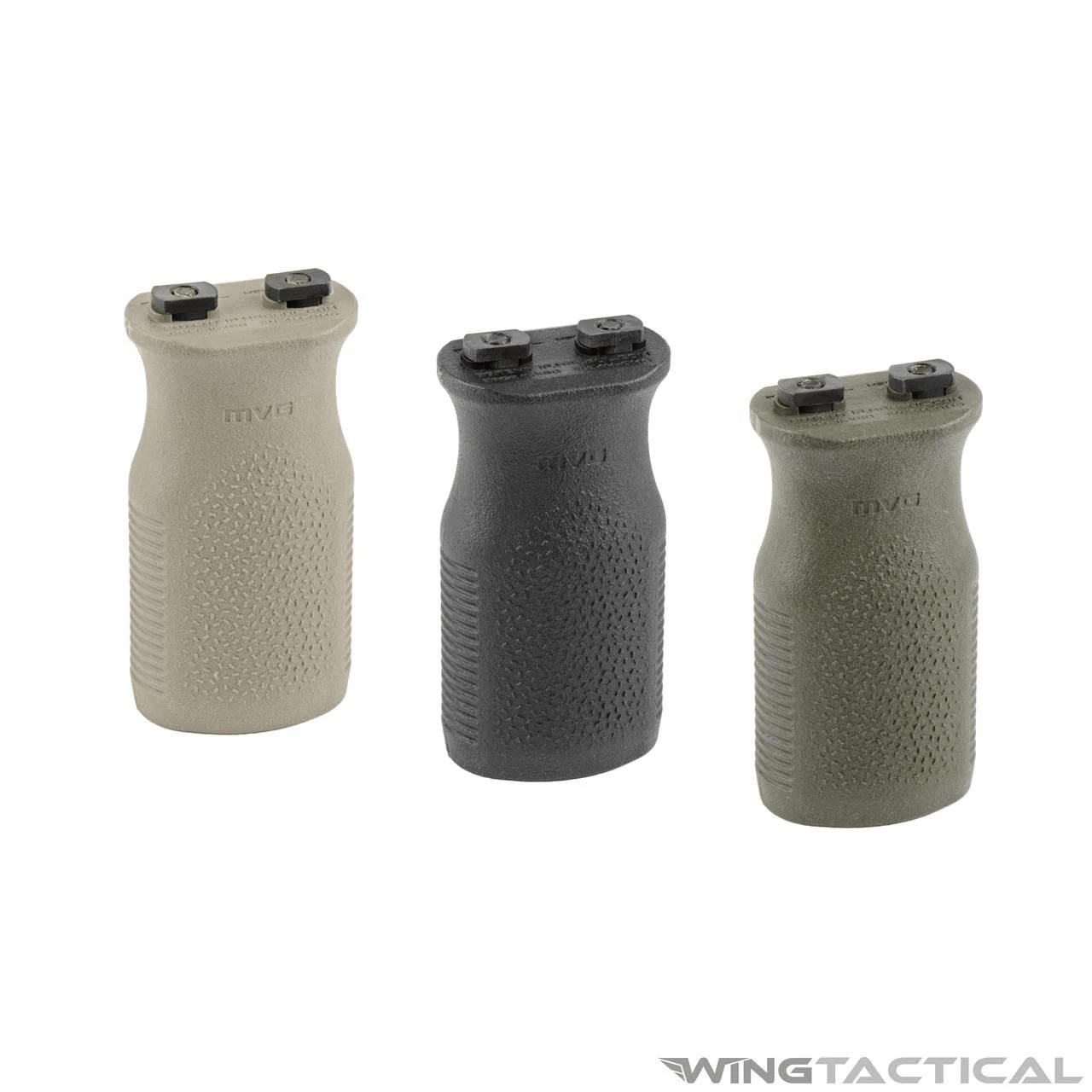
Vertical foregrips carry on the lineage of those early “broomstick” foregrips on the M16. Modern renditions are often shorter with better ergonomics while retaining the 90-degree angle.
Vertical foregrips are great for hooking on to things in your environment to provide a better shooting platform. This could be a retention rope, a barricade, or the edge of a wall. Either way, the foregrip will help stabilize your rifle for better accuracy.
Originally, you were expected to grip the whole foregrip in your hand. Over the years, it was found that you just needed to apply pressure to the grip, which led to the development of the angled foregrip.
2. Angled Foregrip: The Ergonomic Choice
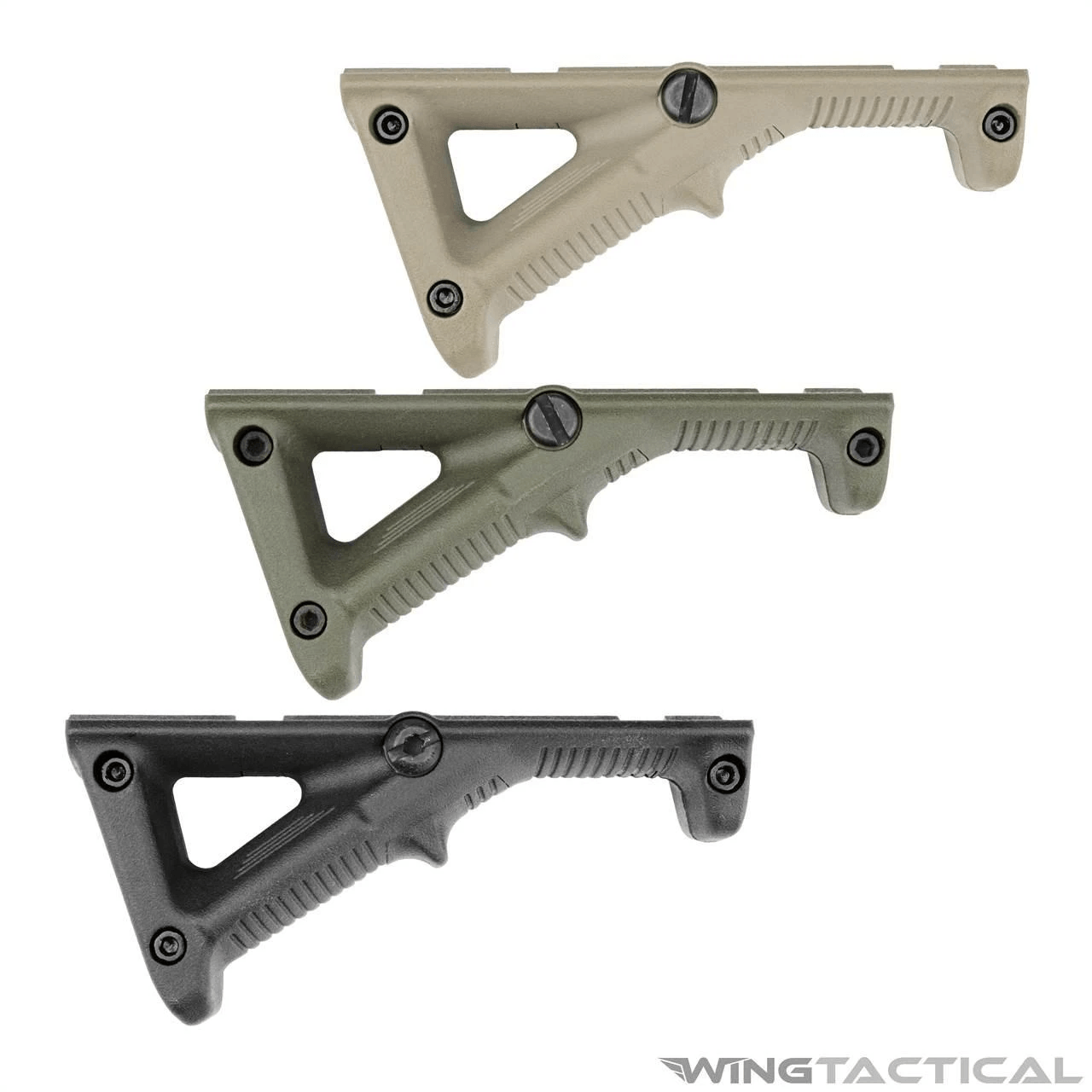
Once shooters figured out that you did not need to wrap your whole fist around a foregrip to get good results, the modified C-clamp grip was adopted. Angled foregrips are designed to work with this grip style to help reduce wrist stress while providing a larger surface area for your fingers.
Angled foregrips start to bridge the gap in the handstop vs foregrip debate because they share a lot of similarities to some handstop designs. These similarities include a physical reference point, a hand locked into a specific position, and more linear profiles.
You could even argue that handstops are the evolution of angled grips that angled grips are to vertical grips.
How Handstops Work
An AR-15 handstop is a small accessory that provides a physical reference for where to place your hand on the forend. It can be used to pull the rifle into your shoulder, but its primary purpose is to ensure consistent hand placement.
Handstops are the minimalist option for ergonomic accessories. Some variations do look like flattened, angled foregrips, while others are a single ledge.
- Prevents the hand from going too far forward or too far back
- Offers a tactile reference point
- Provides a lower snag hazard
- Has lower profile designs
Handstop Variants: Normal and Barricade Stops
Handstops come in two major variants: normal handstops and barricade stops. Each is meant to help control your rifle differently while using similar designs.
1. Normal Handstop: Minimalist Standard
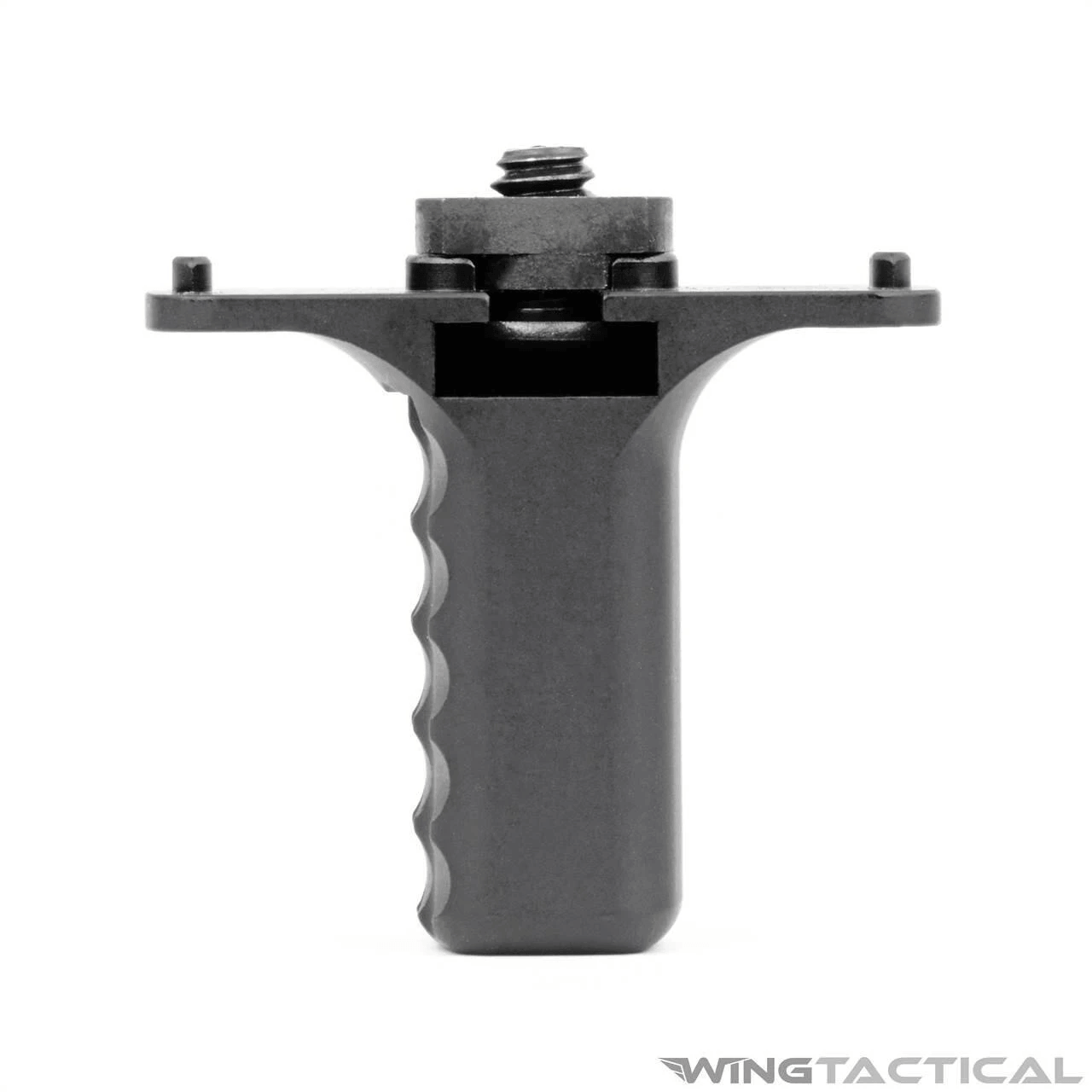
Normal handstops can blur the lines in the handstop vs foregrip discussion. Some variations have two projections while others have a singular projection. They can be used similarly to both versions of foregrips but are often smaller and narrower.
Normal handstops are all about how your hand works with your rifle. It keeps your hand in the same place. It also helps with safety by preventing you from putting your hand too far forward on shorter barreled guns.
2. Barricade Stop: The Other Hand Stop
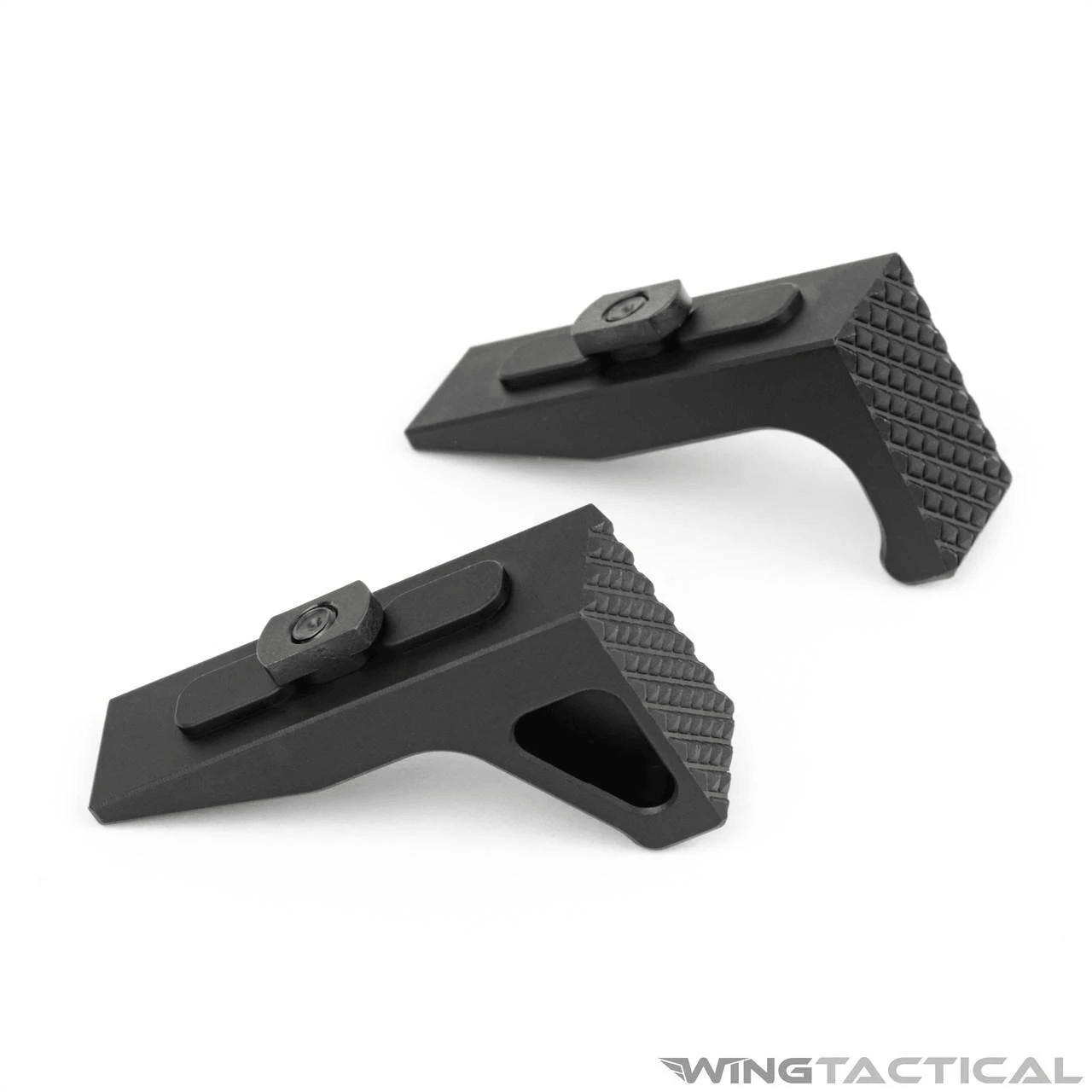
Unlike normal handstops, barricade stops focus on how your rifle interacts with the environment. They allow you to push the rifle against whatever you are using as a rifle support. Whether that's a wall, a railing, or another flat surface.
Barricade stops do have a secondary function like a handstop, but are usually placed farther forward on the handguard. Using your body weight to stabilize your rifle against the barricade provides superior accuracy when compared to offhand shooting.
Foregrip or Handstop: Which One Should You Use?
The unfortunate reality of the handstop vs foregrip question is that it depends on what you are using the rifle for. Some of the benefits of vertical grips work better on shorter-barreled rifles, while angled grips work for more medium-length barrels
Handstops help those who want lower-profile handguards to get a better grip on the gun, and barricade stops allow for better stability through using your environment. Everyone’s situation and needs are different. Knowing how these accessories impact your situation will be the deciding factor.
If you need help selecting the right option for you, send us an email, and our experts will guide you through the decision-making process.
Frequently Asked Questions
Where should you place a hand stop on an AR-15?
A handstop should be placed somewhere in the middle or last half of your forend near the muzzle. This will keep your hand near your accessories' controls while also helping with muzzle control.
Is a handstop considered a foregrip?
A handstop may be referred to as a foregrip out of convenience, but a handstop is not defined as a foregrip.
Can I have a foregrip on my AR-15?
Yes, handstops can be put on normal AR-15s. However, it is recommended to check local restrictions before getting a new accessory.
Can I put a foregrip on my AR pistol?
Putting a foregrip on your AR pistol places it under the definition of “Any Other Weapon” (ATF 2.1.5), which subjects it to regulation by the ATF and the National Firearms Act (NFA)
Where should I place my foregrip on my AR-15?
Your foregrip should go where you naturally place your hand when shouldering the rifle. For most, this will be near the middle of a mid-length rail. This can be determined by trial and error.