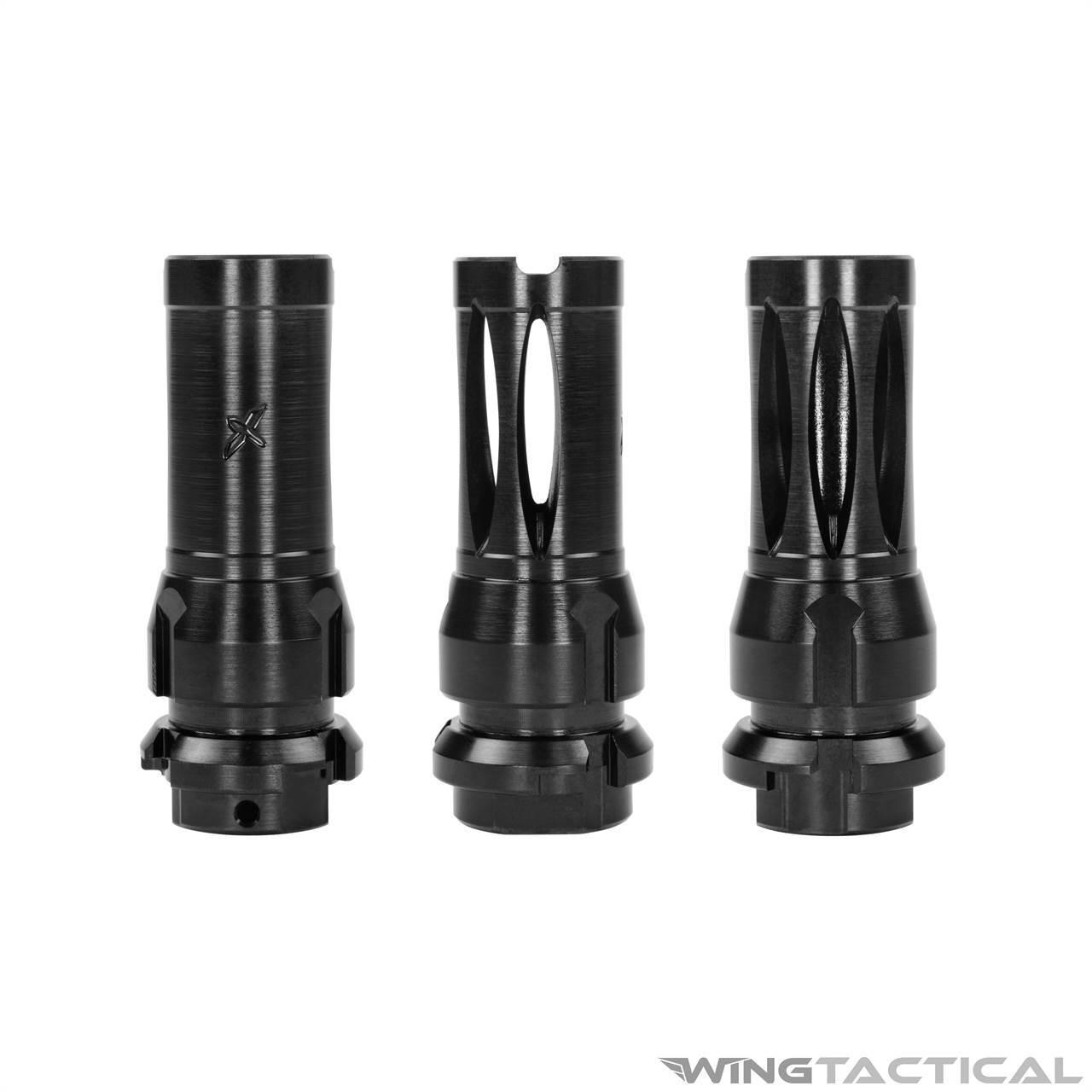
- There are five major variations of the muzzle device
- Your needs narrow down the type of device used
- Muzzle devices reduce flash, redirect energy, or both
- Many modern designs try to do it all
Choosing a muzzle device for your firearm can be intimidating. There are so many options, and each build has different parameters. This is why a muzzle device comparison is necessary.
We will go over the five major types of muzzle devices so you can determine which type is right for you. This will allow you to save time and ignore the options that do not suit your needs and tastes.
Choosing the Right Muzzle Device
No matter what, every muzzle device comes down to muzzle flash or muzzle energy. This means it will try to reduce the amount of light that emitted by the gun or redirect the extra energy at the muzzle. These goals are simple and direct.
All muzzle devices will try to achieve one or more of the following:
- Reduce visible flash
- Redirect muzzle energy
- Reduce felt recoil
- Reduce flash and recoil
| Flash Hider |
|
| Compensator |
|
| Linear Compensator |
|
| Blast Shield |
|
| Muzzle Brake |
|
Flash Hiders: Mitigating Muzzle Flash
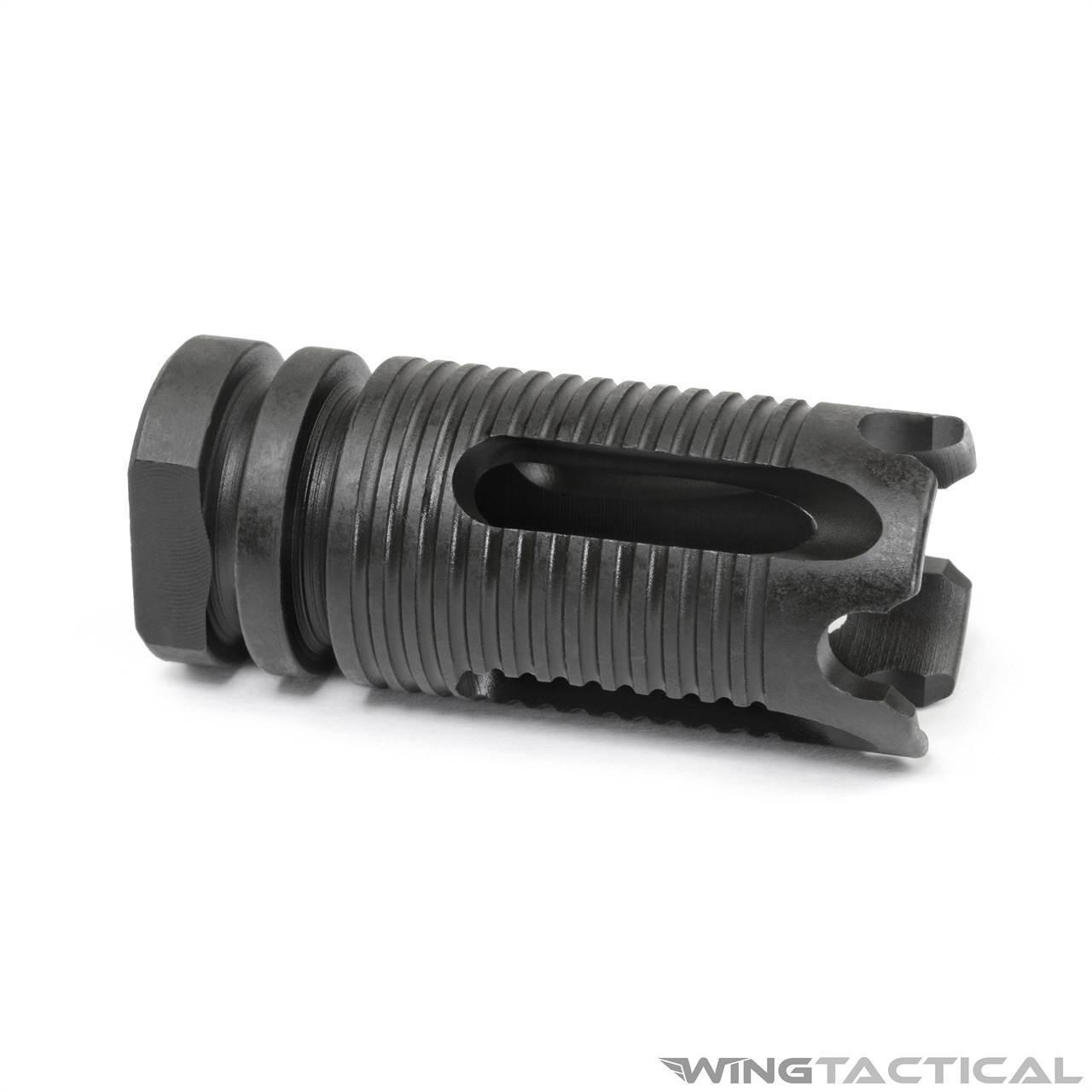
Muzzle flash is one of the big issues of shooting in multiple environments. Whether this is low light, at night, or in a building, there is a lot of light produced at the muzzle. This is especially true if you use a shorter barrel or loads with a lot of powder.
Flash hiders break up the muzzle energy that produces that bright light. This does not necessarily redirect energy, but it does disperse it in a way that dims the bright light. This can be especially handy for rifles known to “throw fireballs” and can lend a certain tactical advantage.
A flash hider is needed for:
- Shooting in low-light or dark areas
- Shorter barrels
- Hot/high-pressure loads
Compensator: Taming Recoil and Muzzle Energy
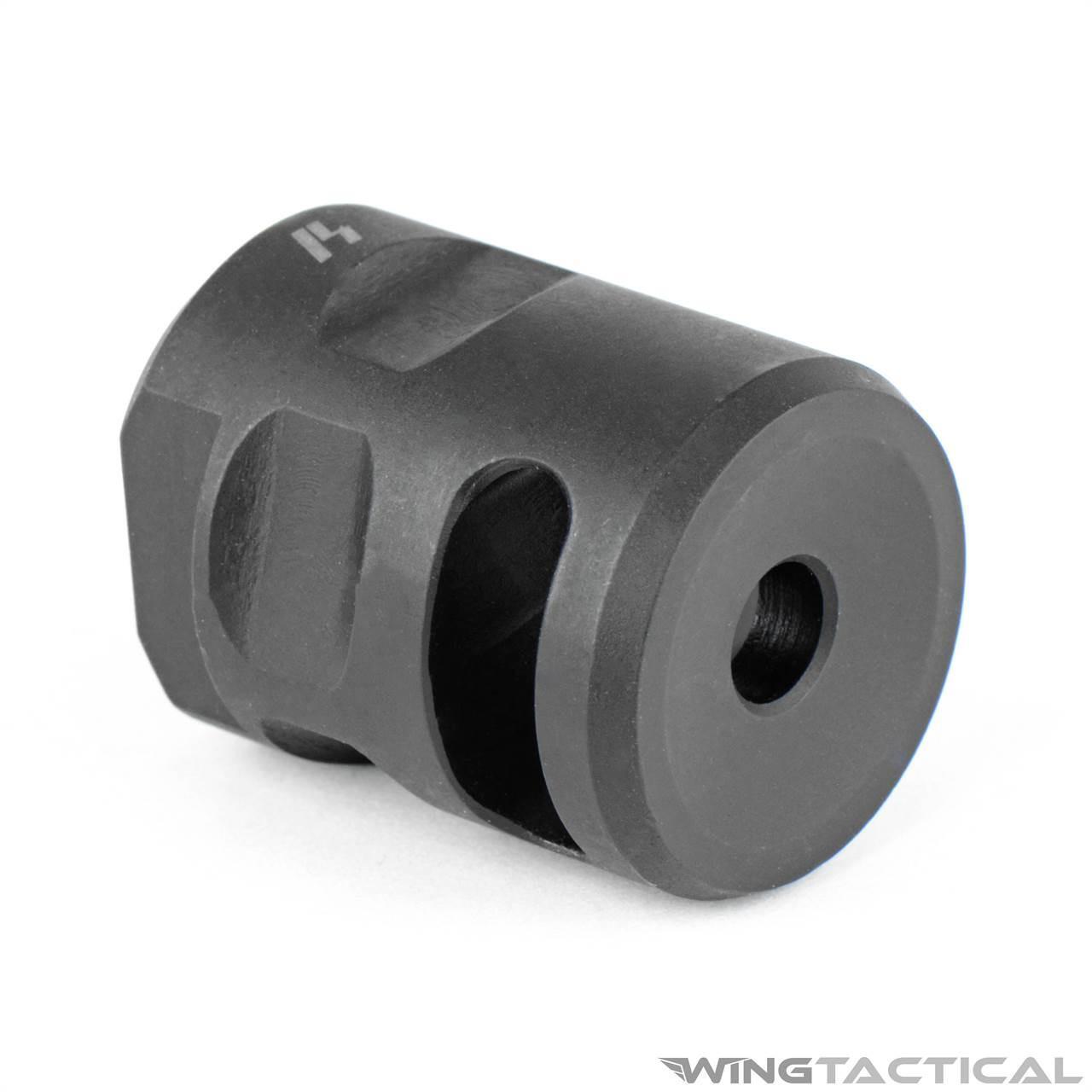
Although the term "muzzle brake" is used interchangeably with "compensator," compensators take muzzle energy and evenly distribute it around the gun. This means there are equal forces pushing outward from the barrel.
This equal force helps keep the barrel aligned with the target while reducing the perceived recoil. Compensators do not do this as aggressively as muzzle brakes, but they tend to kick up dirt when lying prone. They provide the most benefit while standing or kneeling.
A compensator is needed for:
- Standard recoil mitigation
- Standing/kneeling shooting
- Rapid fire
Linear Compensators: Redirecting Energy Forward
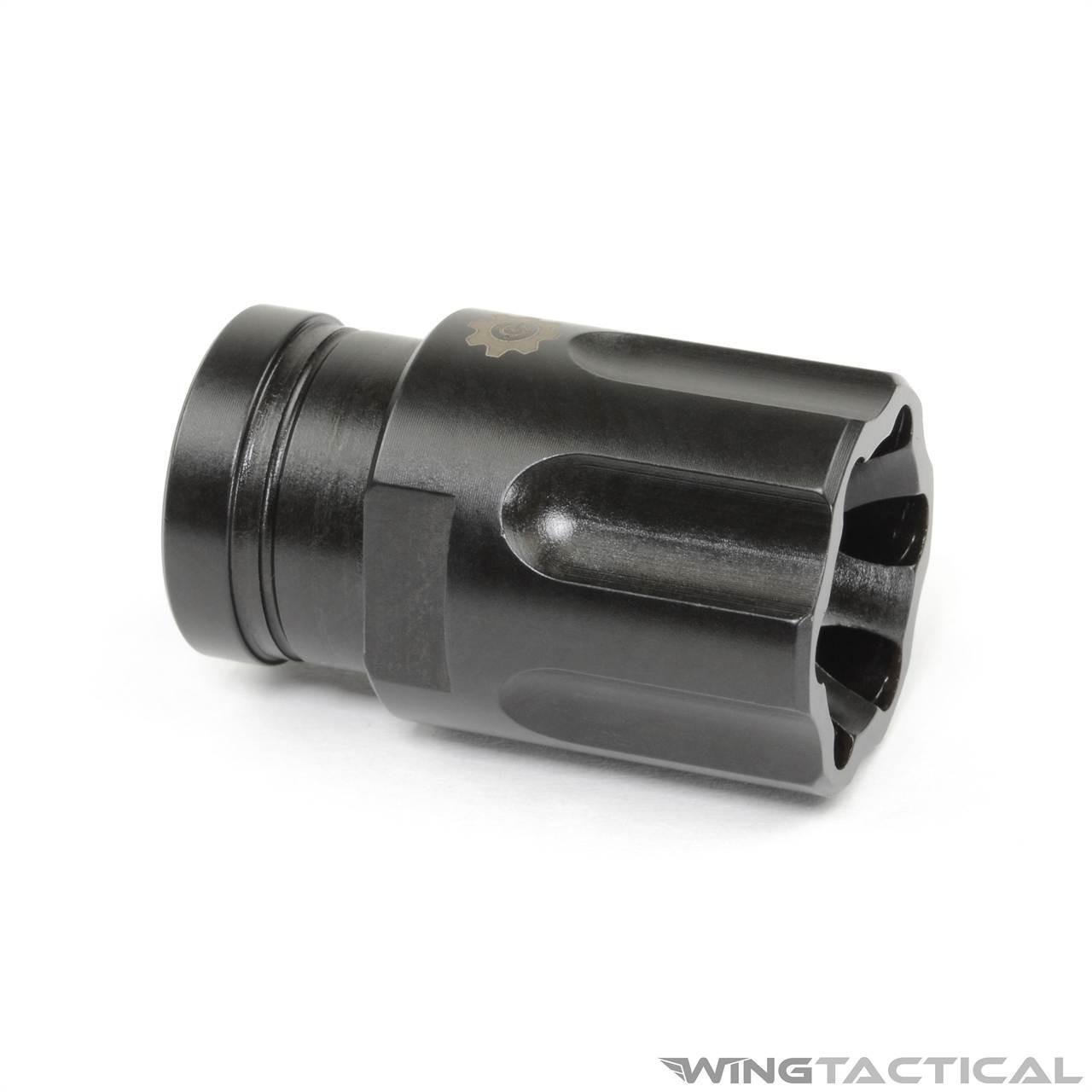
While a normal compensator will evenly distribute the muzzle energy around the end of the gun, a linear compensator pushes that energy forward. Both will achieve the same goal but take different approaches.
Linear compensators direct the energy forward, away from the shooter, making the gun go directly backward. This benefits you and the people to the side of you, since there is no “ring” of muzzle blast around the tip of your barrel.
A linear compensator is needed for:
- Shooting near others
- Directing muzzle energy down range
- Shooting in enclosed bays
Blast Shields: Impeding Muzzle Flash and Energy
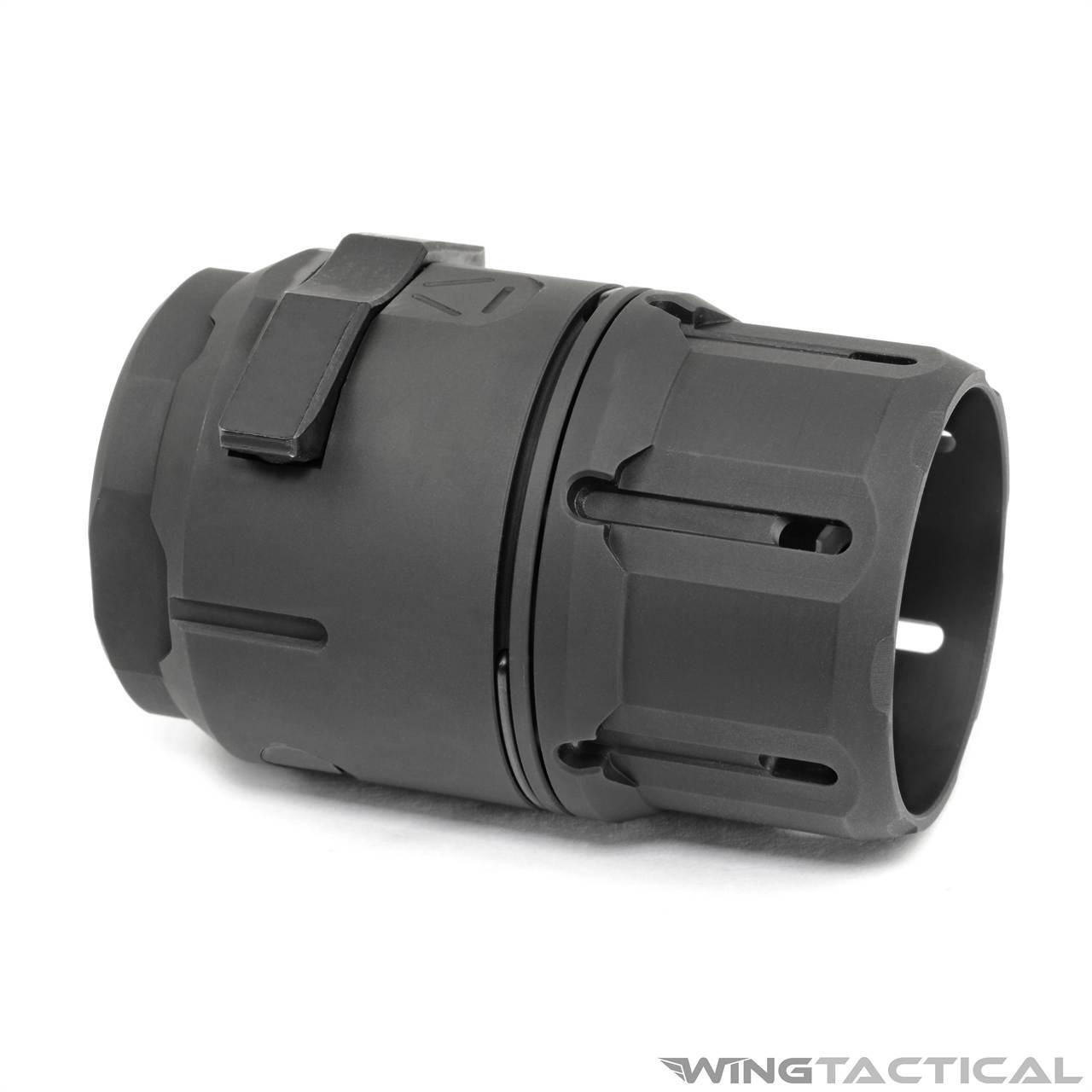
If you want to minimize flash but cannot use a suppressor, a blast shield is the next best bet. While it will function similarly to a linear compensator, a blast shield is designed to handle muzzle flash.
This muzzle device, in comparison to others, creates a small space for the muzzle flash to enter and dissipate while the primary muzzle device does its work. The primary device is often a type of compensator or a flash hider. This allows for some flash and energy to be pushed forward by the blast shield. This creates a physical barrier between the muzzle flash and the shooter’s vision.
A blast shield is needed for:
- Extreme flash mitigation
- Indoor shooting
- Alternatives to suppressor use
Muzzle Brake: Redirecting Energy to the Side
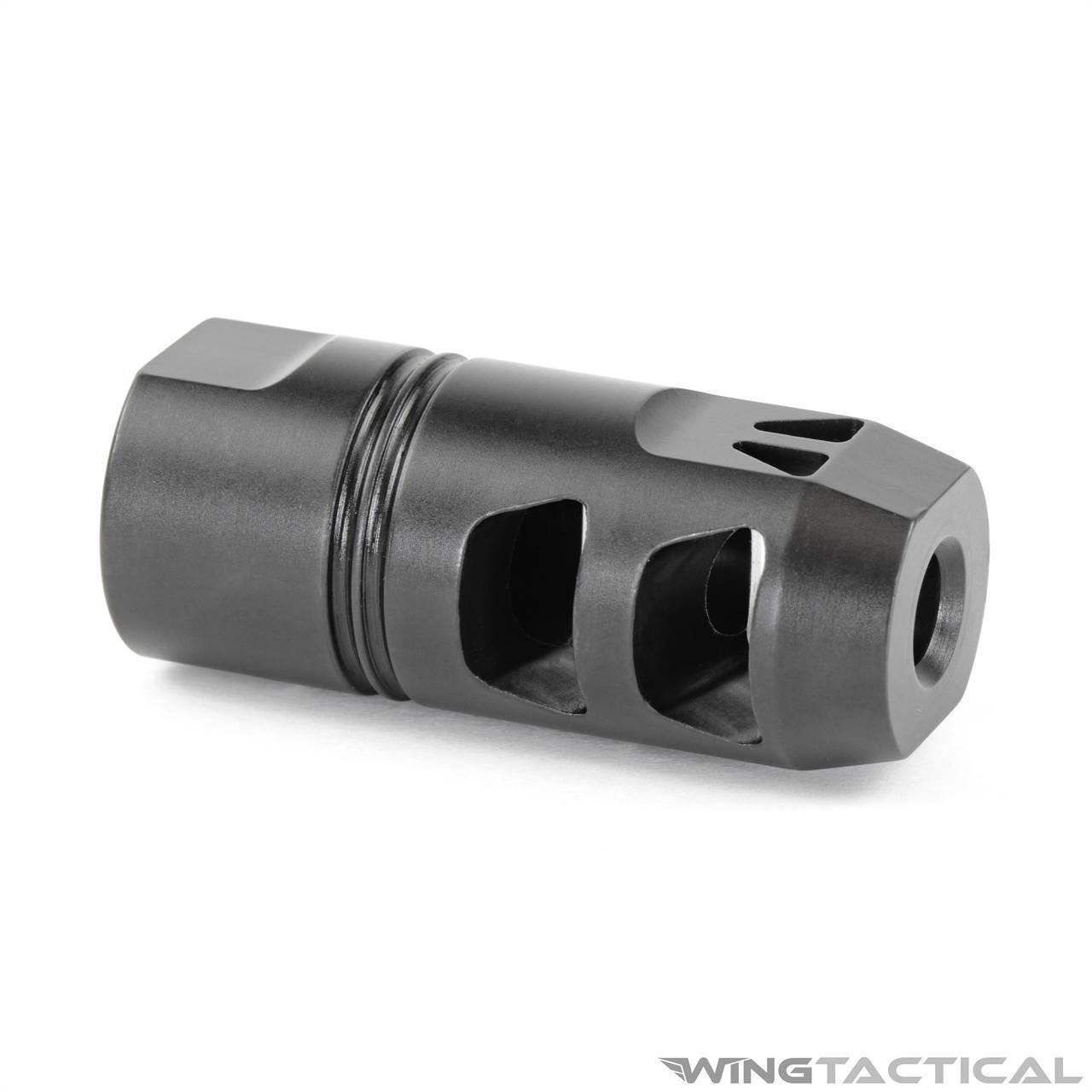
The simplest concept in this muzzle device comparison is the muzzle brake. A muzzle brake simply takes the excess muzzle energy and pushes it somewhere else. This will be either to the side of the barrel, above the barrel, or diagonally from the barrel.
Moving the energy is achieved by specially cut baffles and ports in the brake itself. Some brakes will have porting that directs energy in multiple directions at once. These are often used on heavy recoiling loads or any gun that produces a lot of energy.
A muzzle brake is needed for:
- Heavy recoil mitigation
- Powerful calibers
- Keeping fast shooting flat
Closing Thoughts
This muzzle device comparison is far from the end-all, be-all when it comes to selecting the right one for you. Everyone has their tastes and needs. If you are looking to step beyond a basic A2 flash hider/compensator, there is an entire industry built around alternatives.
If you are in the market for a new muzzle device, you can check out our inventory, or if you need help with selecting your next accessory, you can reach out, and we’ll get you in contact with one of our experts. That way, you make the best decision for your firearm’s needs.