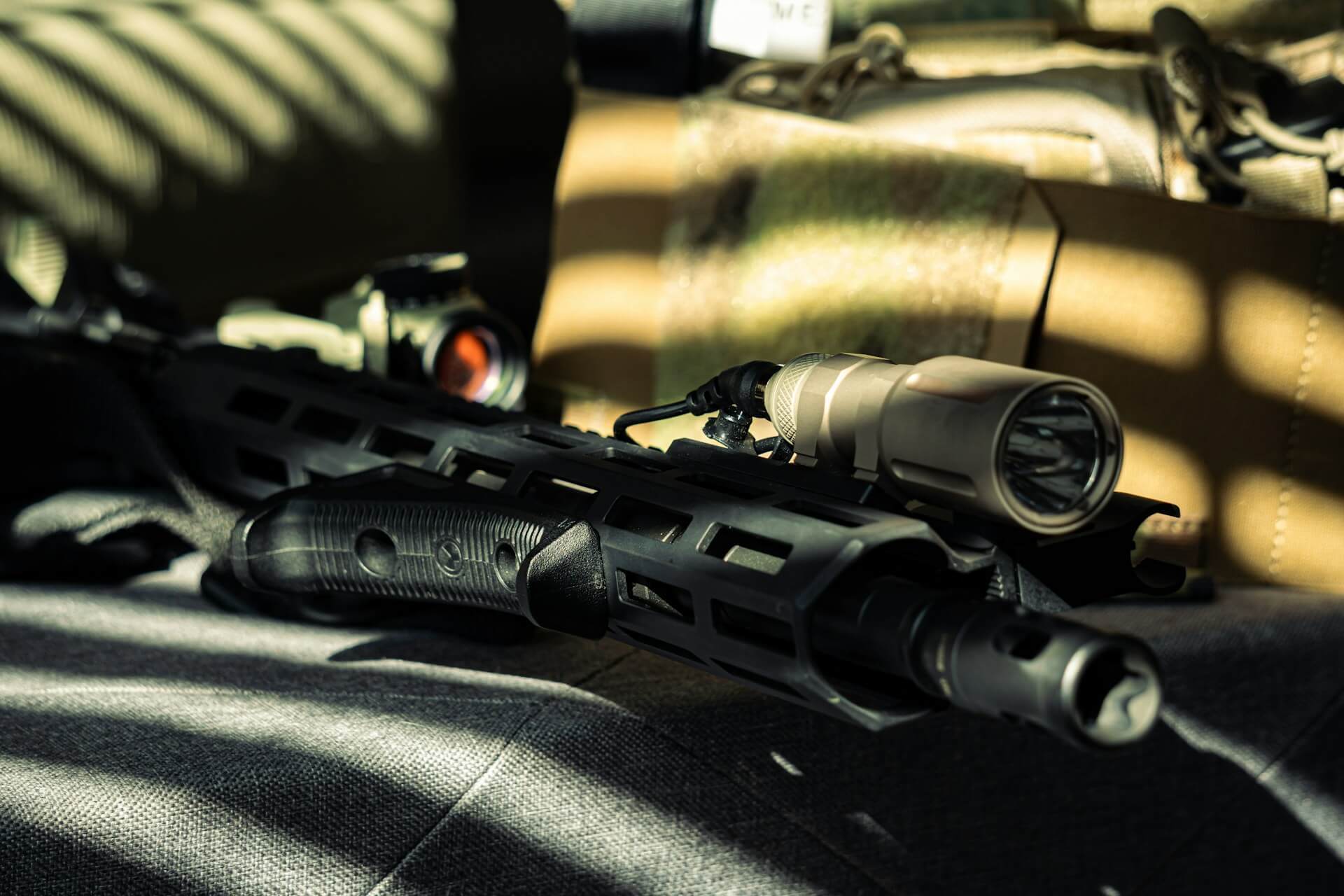
- Home defense guns need flashlights and good sights
- Home defense guns should have some means of retention
- Upgrades should not decrease the gun’s reliability
- Upgrades need to increase the capability
Home defense is an important topic that will always be discussed. From which gun you should use to what upgrades you should have, everything is debated. This is because not everyone’s situation is the same, and everyone has different needs.
Today, we will cover some of the best upgrades you can add to your gun for home defense that work for most people and cover most situations. We will also cover why they are the best upgrades and how they apply to different guns. But first, a few assumptions about the guns involved.
Baseline for Upgrades: A Few Assumptions
We are going to assume you have a reliable off-the-shelf stock firearm. In this context, reliability means that the rifle, shotgun, or semi-automatic pistol can go 500 to 1000+ rounds without a malfunction. For revolvers, this will be 60-80 rounds.
The reasons for this are twofold. First, these round counts are generally when the guns need to be cleaned. Dirty firearms with excessive carbon will start to malfunction. High-quality options will go farther than the baseline, but not everyone can afford a gun that costs multiple thousands of dollars.
Secondly, a firearm that jams or misfires regularly is not something you want to try to rely on, especially in a defensive scenario.
The Best Upgrades for Home Defense
There are three upgrades that you should have for your home defense gun: a flashlight, a better sight, and a sling. The “trifecta” handles the three largest factors involved in using a gun: positive identification, effective aiming, and retention of the firearm.
No matter the defensive scenario, one or more of these factors will be in play. Each upgrade addresses eventualities rather than ideal situations, making them easier to handle.
Positive Identification: Weapon-Mounted Lights and Flashlights
The most important part of a home defense scenario, especially a family home defense scenario, is positive identification or PID. PID is making sure that you are facing a real threat. There are too many stories of innocent individuals being killed because a proper PID was not established.
For most people, this means using a flashlight. Weapon-mounted flashlights* allow you to verify who you are looking at. Most of life happens without clear lighting. Bringing a strong flashlight into the mix lowers the risk of accidental harm.
Some scenarios can even be defused by introducing a very bright light. This can cause lower-threat individuals to flee or conclude that no threat is present. However, if a threat is present, bright light will allow for clearer, effective aiming.
Lights can:
- Help identify threats
- Illuminate dark rooms/areas
- Disrupt low-threat scenarios
*Note: Revolvers and some semi-automatics cannot accept a weapon-mounted light and will require the use of a handheld flashlight.
Better Sights: Improved Aiming
Being able to aim effectively means that if lethal force must be used, accurate shots will win the day. This means lowering the risk of missing, which in turn builds a safety cushion for bystanders. Let’s cover the ideal, niche, and acceptable options for better sights.
Red Dots and Holographic Sights: The Ideal
For most home defense scenarios and ranges, a red dot sight or holographic sight will work. They are easier to use in a wide variety of lighting conditions, simple to understand, and allow for faster aiming.
Red dots will work on rifles, shotguns, pistols, and revolvers. They allow you to zero the sight effectively to the ammunition you use and the ranges you are comfortable with. Both red dots and holographics can be paired with a magnifier on long guns to add additional utility to your build.
LPVOs: The Niche
A low-powered variable optic (LPVO) adds more magnification to your rifle. This means easier shots at distance while maintaining the ability to engage closer targets. For a home defense scenario, this is a very niche choice.
The reason a sight like this would be used is that you either only have one rifle to do everything, or you live in a rural/semi-rural location, and defending your home may include the rest of your property.
Very often, the best-optimized LPVO builds include a piggybacked or offset red dot sight. This combination should be kept in mind when selecting generalist rifles for home defense.
High Visibility Iron Sights: The Acceptable
Iron sights are still a viable sight option, but they are not ideal, especially in the modern market. However, if you cannot afford a red dot or similar optic, swapping out your standard iron sights for high-visibility sights is an acceptable alternative.
This will largely apply to smaller options like revolvers and semi-autos, because many rifles are available with bundled optics, and a shotgun’s bead sight can be exceptionally effective at traditional home-defense distances.
Retention: Slings and Holsters
Being in control of your firearm is part of your responsibility as a gun owner. This is even more true in a home defense scenario. This means you need to keep your gun close at hand while still being able to perform basic tasks like calling 911, moving items, or rendering aid.
Slings: The Long Gun’s Holster
A sling is the best way to free up your hands while keeping some level of control on your long gun. Whether it is a shotgun or a rifle, being able to sling it lets you use your hands for whatever task needs to be done.
Using a sling can place the long gun on your back, over your centerline, or under an arm when not in use. Additionally, it can add stability while you’re aiming and shooting, depending on the sling style.
Holsters: The Best Way To Carry a Handgun
Since some people cannot afford a second gun, they have to use a pistol for their home defense. Every handgun should have a quality holster, and for home defense, it should be paired with a solid belt or body holster so you can retain the pistol when you do not need it.
A home defense holster should:
- Retain the pistol
- Cover the trigger
- Hold the cylinder in place (Revolver only)
- Be hard to remove from your body
Parts
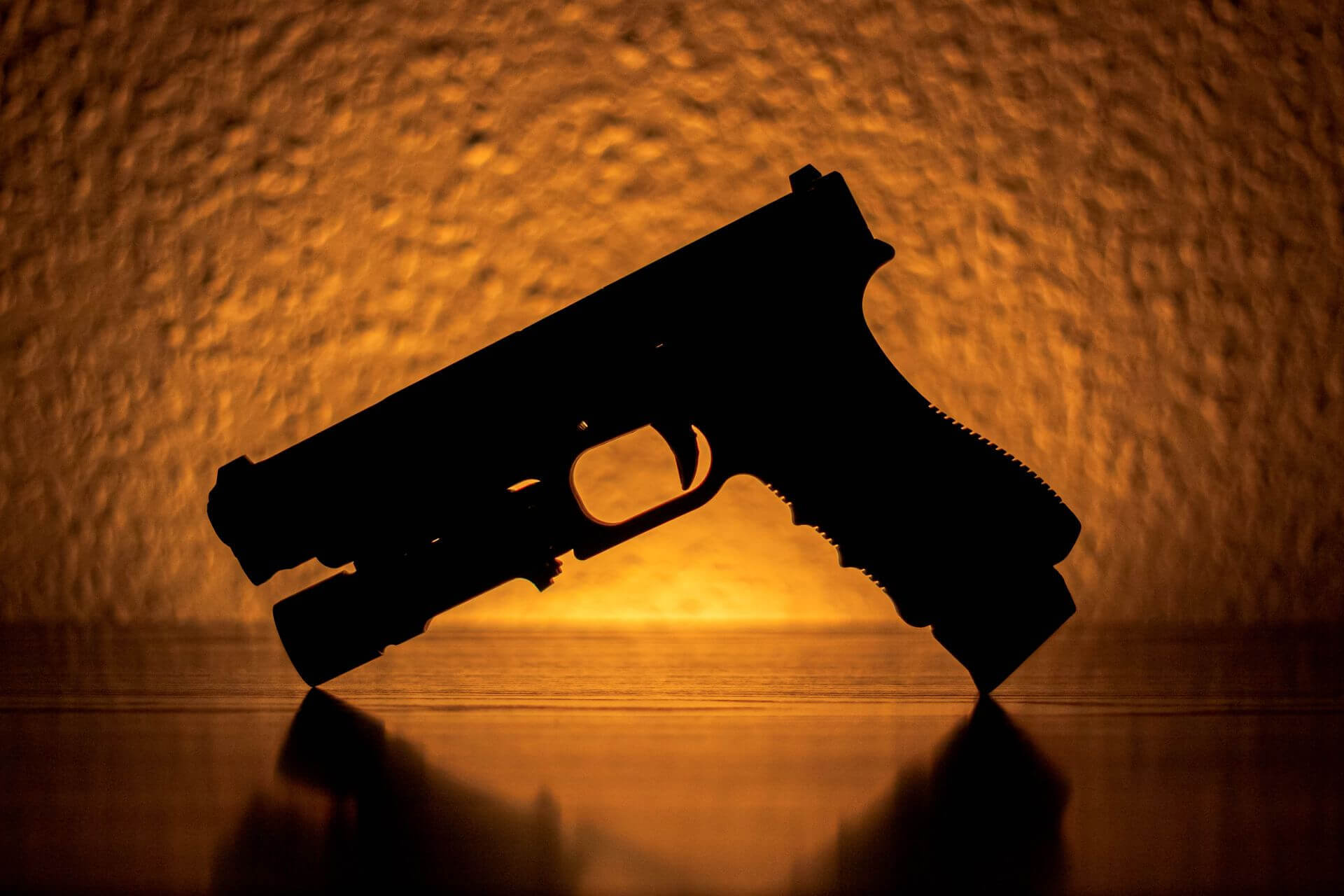
The last thing you want when you’re investigating a bump in the night is to have an unreliable firearm. Your home defense weapon does not necessarily need a bunch of swapped-out parts, but it does need to function properly in stressful situations. If something is broken or not working properly, fix it.
Closing Thoughts
Home defense is deeply personal. It covers the safest place most people know. Having a quality flashlight, a good sight, and a good sling or holster on your selected firearm will help ensure that you can defend yourself and others effectively.
If you need help selecting your upgrades for your firearm, you can contact our experts or check out our in-stock accessories for the best options. That way, you get the upgrades you can rely on in the most stressful situations.