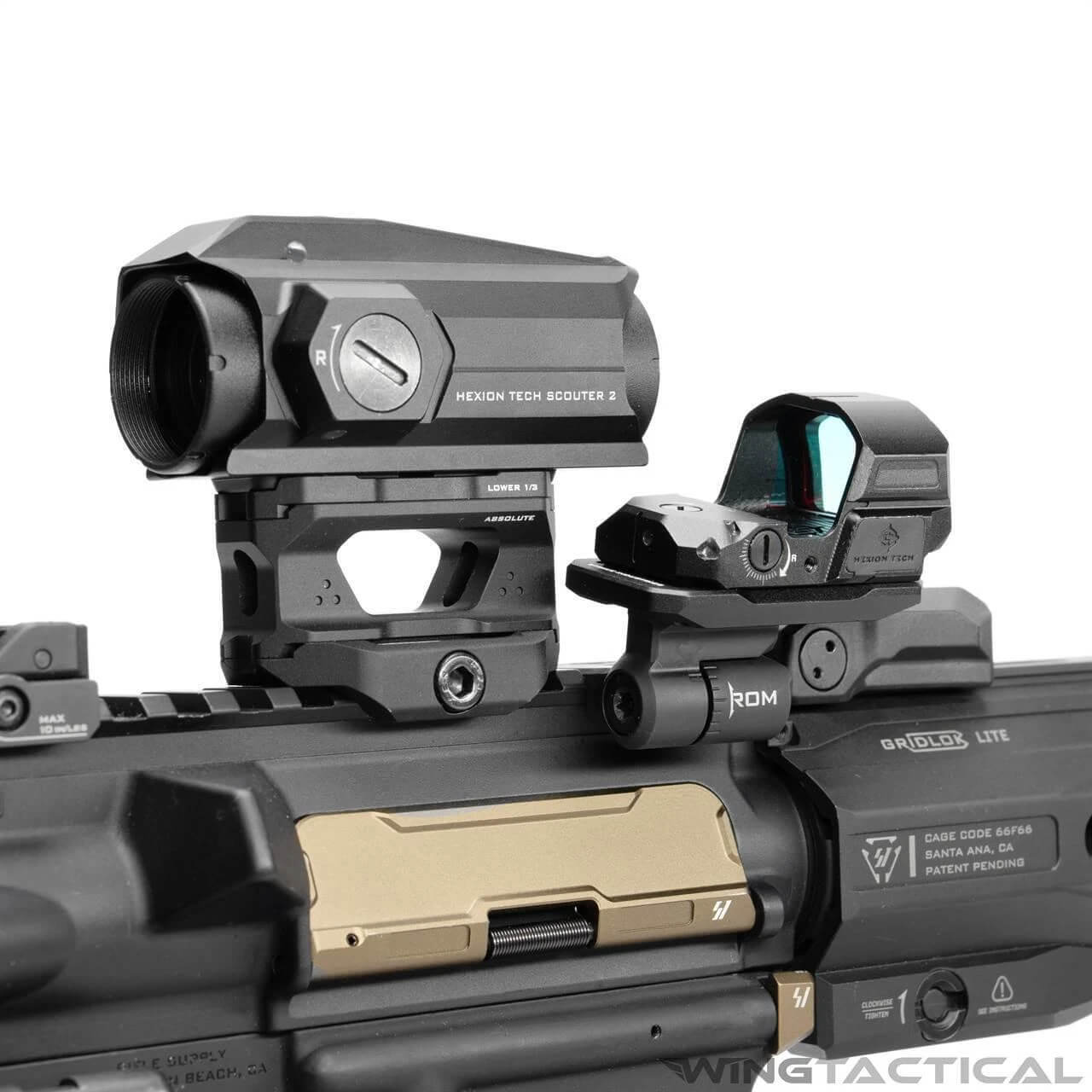
- Rifles have multiple optic mounting heights
- Pistols need to have matching optic footprints
- The style of the optic determines the mounting options
- A rifle optic can be mounted on the centerline and offset
- Pistol optics are mounted to slides or chassis
Buying accessories for your guns can be confusing. Choosing a mount for them is even more confusing. There are so many options available, and each has its own benefits and drawbacks.
We are going to go over how to choose the right mount for your pistol or rifle, the different mounting methods, and answer the question of “Are scope mounts universal?” Let’s start off with rifle mounts.
How to Choose A Rifle Optics Mount
Choosing an optics mount comes down to what capabilities you want your rifle to have. If you want to see farther and hit smaller targets at a distance, a magnified optic is your best choice.
If you want better form factors and quicker transitions between targets at close range, a red dot or similar optic is the best option. Each works differently with your rifle.
The Two Types of Optic Mounts: Magnified and Non-Magnified
Optic mounts for magnified and non-magnified optics will be different. Magnified optics mounts are often larger and longer to accommodate the longer, heavier magnified optics.
Non-magnified optics mounts tend to be more space-efficient and lighter, since they do not need to counterbalance the extra glass and tube lengths.
|
Magnified Optics Examples |
LPVO (Low-Power-Variable-Optics) MPVO (Medium-Power-Variable-Optic) Fixed Power Optics (2x or more Prism sights) |
|
Non-Magnified Optics Examples |
Red dots Holographic sights 1x Prism sights |
Rifle Optics Mounts: How Your Sight Interfaces With Your Rifle and You
Having an optic on your rifle allows you to aim better. How that optic is mounted determines how your vision interfaces with it and how it interfaces with your rifle. Whether you use a magnified or non-magnified optic, you will need it to be consistent.
In the modern day, rifles will often have multiple optics mounted to them at once. This allows for the best of both worlds at the cost of overall size and sometimes weight. Optics are either mounted on the rifle's centerline or offset.
Centerline Mounts: The Traditional Standard
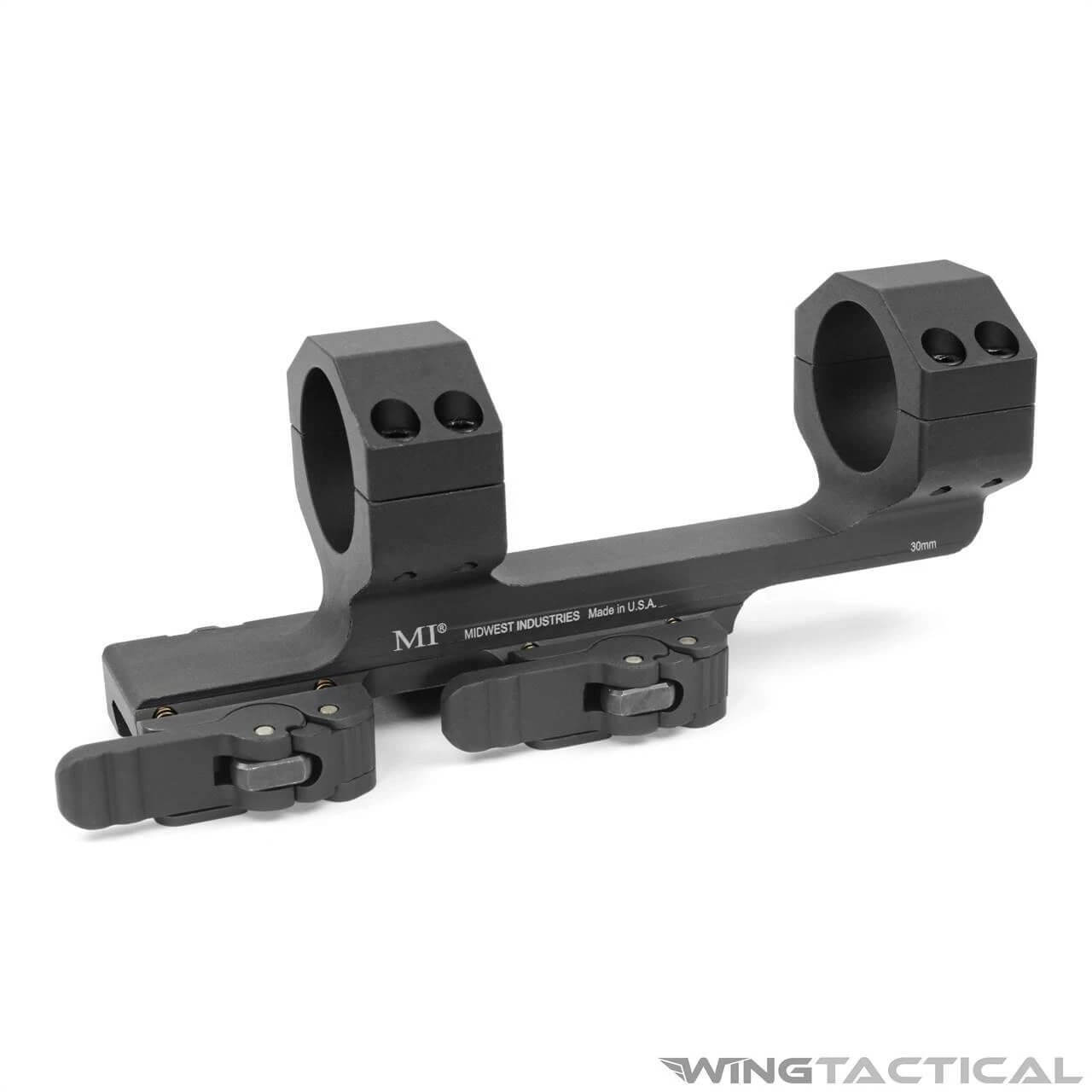
Centerline optics mounts work with both magnified and non-magnified optics. These are the first optics mounts you will encounter when you want to go beyond iron sights for your rifle. For magnified optics, you will need to match the tube size with your scope rings.
For non-magnified optics, you will need to determine how high the mounting riser should be so you can comfortably look through the optic. Higher mounts will be easier to use with eye protection and gas masks, while lower mounts will offer better mechanical offsets, reducing point-of-aim/point-of-impact differences at closer ranges.
As for the question “Are scope mounts universal?” the answer is no. Many scope mounts share mounting surfaces, such as Picatinny, or have similar tube sizes for their scope rings. There are currently no universal optics mounts for rifles.
Offset And Top Ring Mounts: The Backup Sight Standards
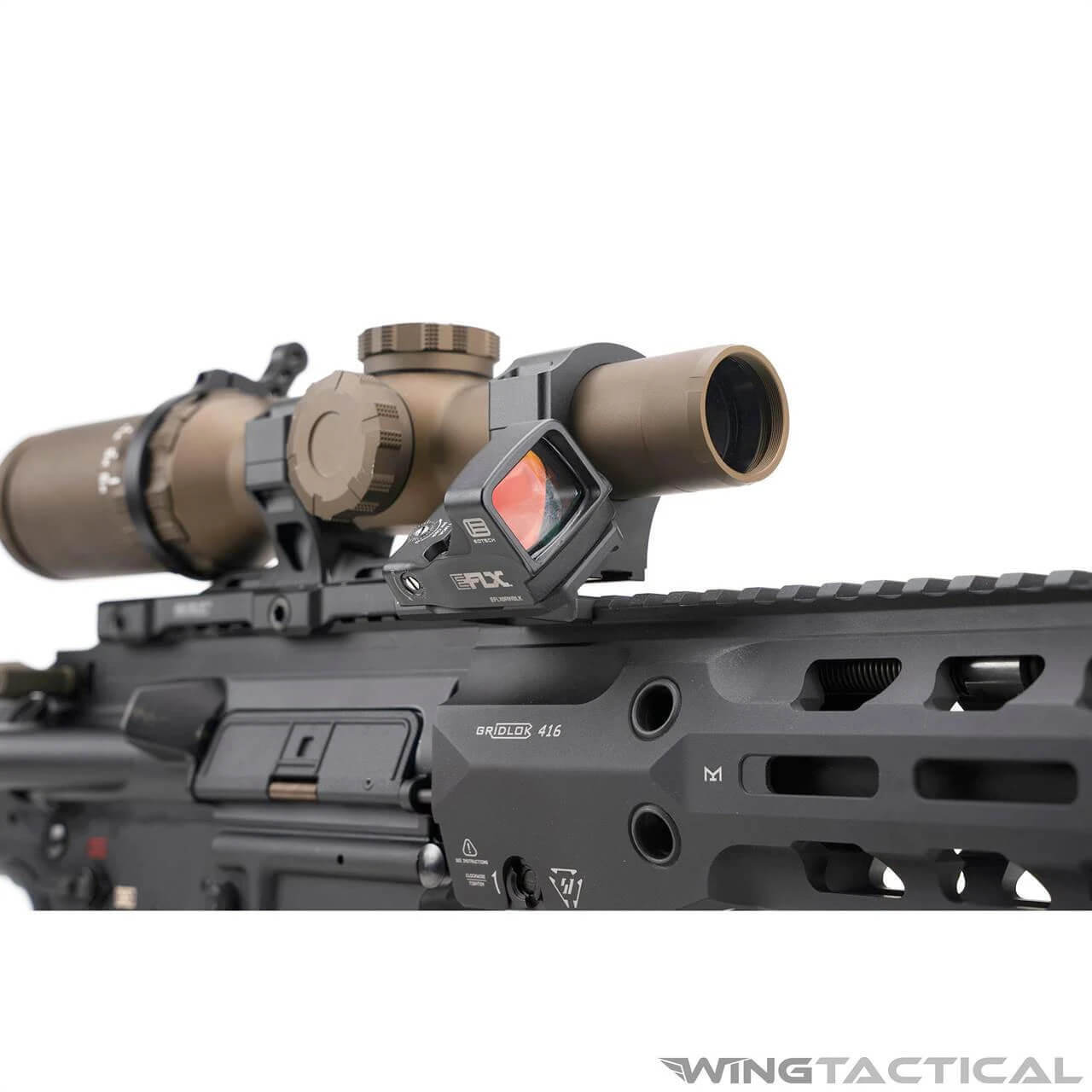
Offset mounts are the standard way to add a second sighting system to your rifle. Offset or canted mounts let you switch from something like an LPVO to a red dot with just a turn of the gun.
Top ring mounts function similarly but keep the optic in line with the bore. They can be used by merely adjusting your head position. Both allow you to transition between optics fluidly. Another consideration is having a second working optic in case your primary one fails or breaks.
Choosing A Pistol Optic Mount
Mounting an optic on a pistol has a number of challenges. The biggest challenge is the limited space on the pistol itself. Because of this, most semi-automatics will only be able to use a red dot sight for their optic.
Optics are mounted in one of two ways. Directly to the pistol for better concealment and everyday carry. Or by mounting the sight to a chassis system to upgrade a standard pistol at the cost of concealability.
Direct Mounts: Footprint Compatibility
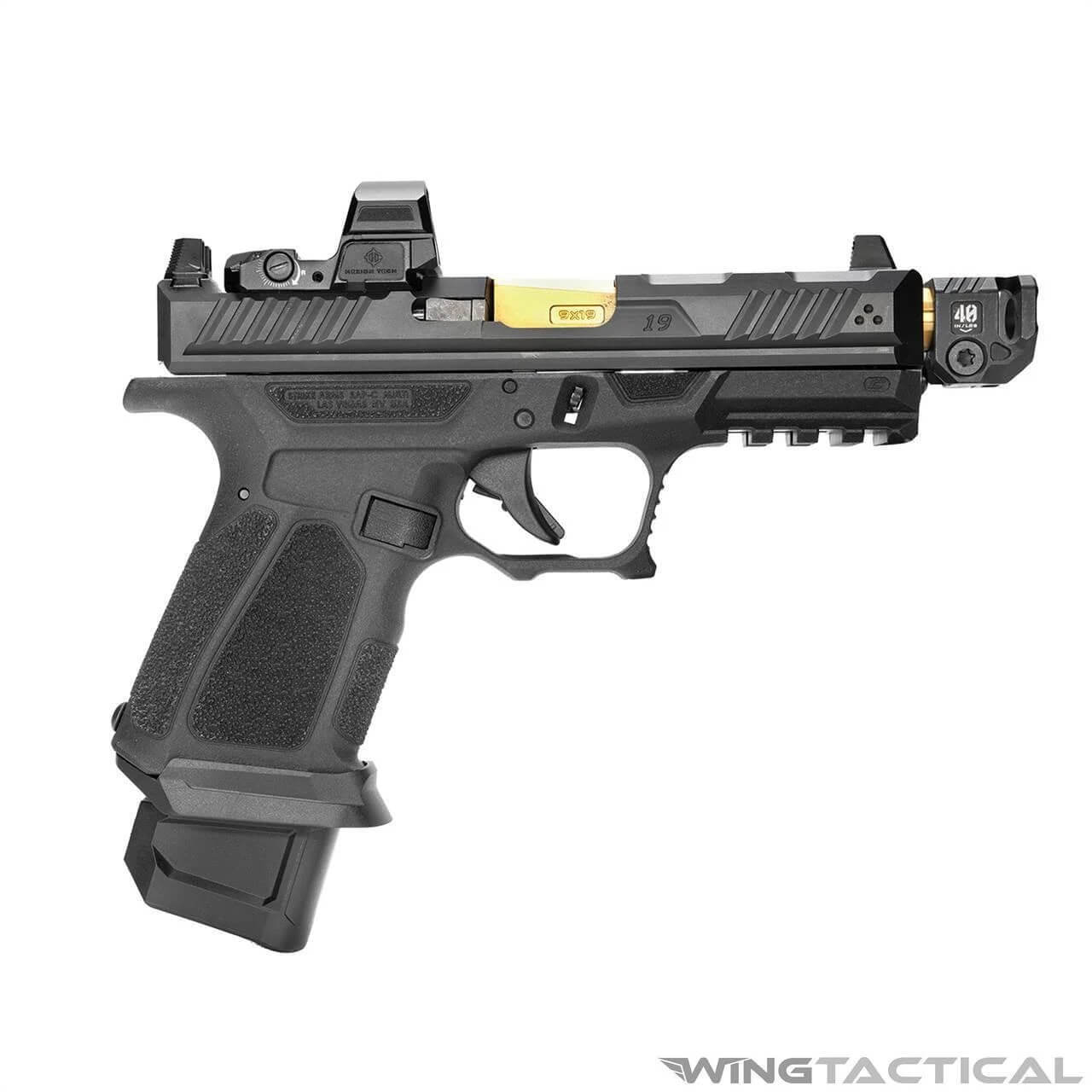
Pistol optics come in many shapes and sizes. The bottoms of these optics are referred to as the optics’ footprint. This is important because a pistol slide needs to accommodate the optic’s footprint to mount it on the gun.
There are two primary ways to mount a pistol optic directly. Factory-milled slides and aftermarket milled slides.
Factory-Milled Slides and Mounting Plates: Optics-Ready Options
Many pistol manufacturers offer optics-ready variants for the modern market. They use a base slide cut that offers multiple mounting plates for specific optical footprints. This is convenient for someone looking to purchase a new handgun that is ready out of the box.
However, that mounting plate introduces additional tolerances that need to be considered for your optic. If the plate is not properly fixed to the slide, the optic can shift during use, causing accuracy issues such as a wandering zero.
Aftermarket Milled Slides: The Classic Custom Option
Having your pistol’s slide milled used to be the only way to mount a red dot directly on your pistol. It is still viable today since some factory mounts may not have the necessary tolerances to firmly mount the optic.
Milled slides often accept only one optic footprint for consistency and can be expensive to obtain. But the consistency it offers is worth the cost to some.
Pistol Chassis: The Mount Alternative
Pistol chassis are a great way to add more versatility to your pistol. Some chassis allow you to mount optics on a standard iron-sighted pistol, as well as lights and even extra magazines. Their primary drawback is that they increase the pistol’s size.
The larger size pushes the pistol more into the Personal Defense Weapon (PDW) category. This can make it easier to shoot, but harder to carry around.
Closing Considerations
There is no single solution for mounting optics on your rifle. The environments you will use it in and the job it needs to do will all require a certain level of compromise. For some, an LPVO with an offset red dot is ideal. For others, a prism optic with a top-mounted red dot best matches their needs.
If you need some help selecting your next optic, reach out to our experts through our contact us page. We are happy to help you select the accessories you need for the guns you depend on.
Frequently Asked Questions
Are scope mounts universal?
No. Scope mounts are made to match tube sizes for magnified optics.
What do I need to mount a red dot on my pistol?
To mount your red dot on a pistol, the pistol needs to have a matching optics footprint. This can be achieved with a mounting plate or by having the footprint milled into the slide.
What is a 45-degree offset used for?
A 45-degree offset is a mount type that allows you to place a secondary sighting system to the side of your primary optic.
Why are some optics mounted so high?
Many non-magnified optics have taller mounts for easier use with gas masks and other personal protection equipment. They also allow for more comfortable head positioning.