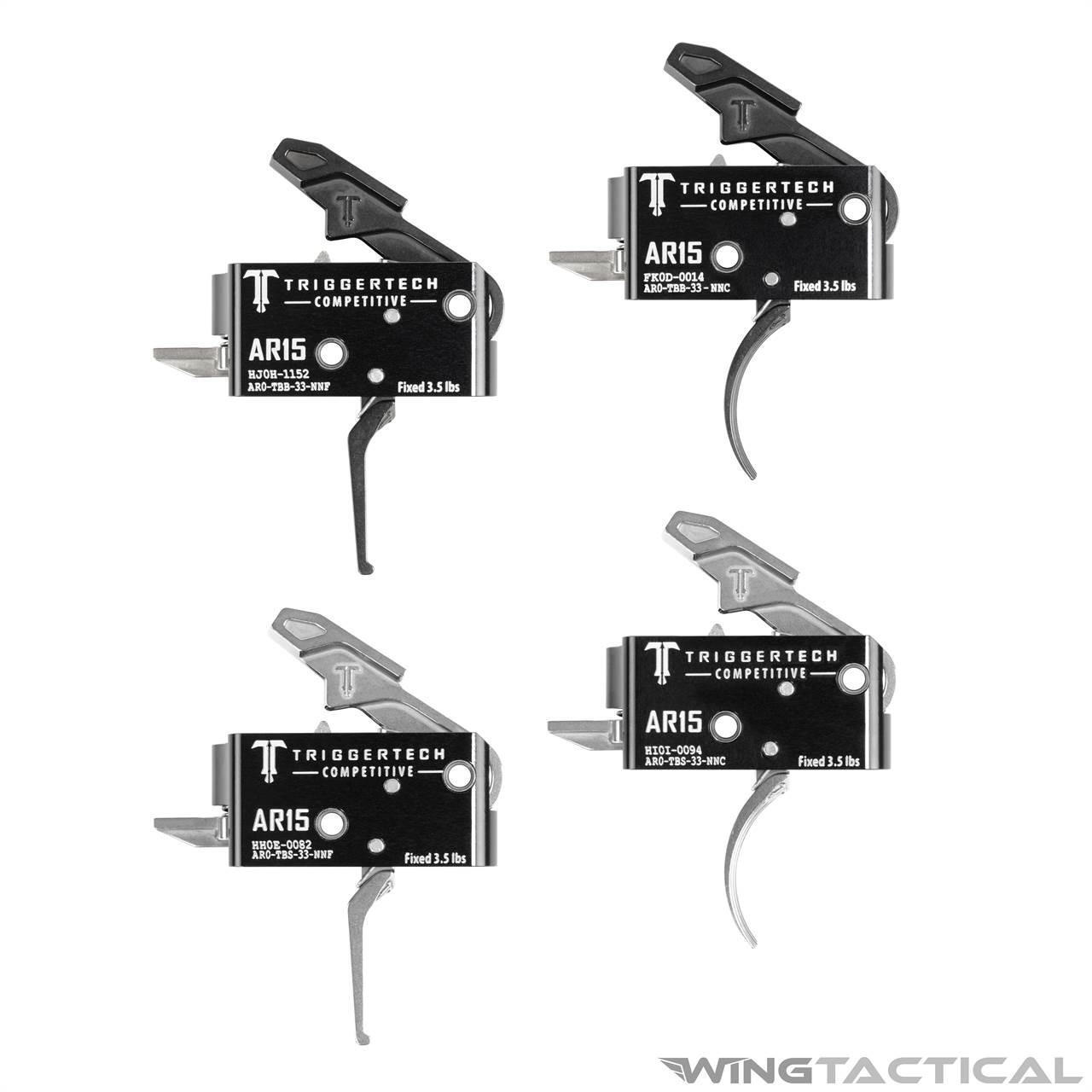
- AR triggers are replaced for better performance
- Some replacements are based on personal preference
- Single and 2-stage triggers provide different benefits.
- Curved and flat triggers focus on different aspects of shooting.
The question of whether or not someone should replace an AR trigger has been around since AR-15s have been widely available. The standard mil-spec trigger group just leaves something to be desired for some people.
So we are going to go over why people replace their triggers and how each of those choices can affect the performance of the rifle.
Why People Replace Their AR Trigger
People will change their AR trigger for one of four reasons. The first reason is performance. This one is very easy to understand. Your current trigger is not providing the benefits you need to perform at the levels you want. This comes from experience, and you’ll know what you want to change.
The second reason is preference. People like different things for different applications. Using a different trigger because it suits your shooting style would fall under this category.
The third reason is trigger styling. Curved triggers and flat triggers bring different things to the table. What you want out of a trigger will determine which option is good for you.
Finally, we have aesthetics. Some people like their rifle to look nice, and certain trigger profiles or colors look better than others. Which style looks better is really up to the individual, but these looks can translate to different benefits.
Reasons to swap triggers:
- Better performance
- Individual Preference
- Different trigger style
- Aesthetics
Better Performance
Increasing the performance of your trigger is the primary reason you should replace an AR trigger. This can be anything ranging from trigger pull weight to higher quality parts to faster hammer resets.
If your trigger is slowing you down or causing more problems than it solves, you should replace it. Better reliability beats speed, and reliable speed beats the clock.
AR Trigger Preferences
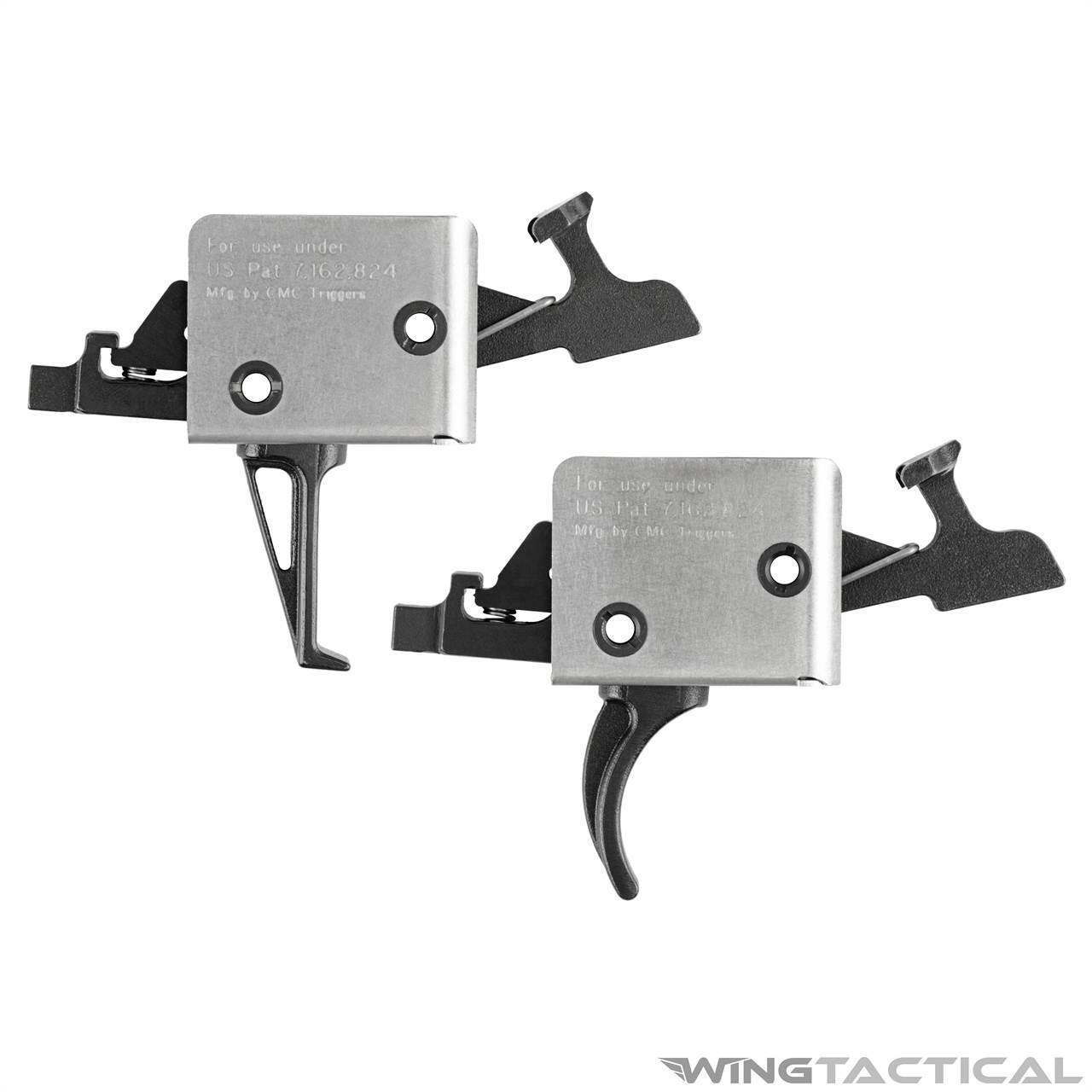
Personal preference for triggers is one of those murky subjects. The different styles of trigger do have inherent benefits, but whether you like those benefits or not comes down to your experience. Some behave better in certain applications, while others will be a liability depending on what you are doing.
There are two major categories of AR triggers that are guided by personal preference: single-stage and 2-stage triggers.
Single-Stage Triggers
The single-stage trigger puts all of the trigger weight in an immediate wall for the trigger. This allows you to pull all of the weight in one smooth move. These tend to be on the lighter end of the trigger weight spectrum and result in faster shots.
While these are great for fast competition guns, they may not be ideal for self-defense since they do not have any take-up. The lack of take-up does not allow for a margin of error in a high-stress environment.
Single-stage benefits:
- No take-up
- Direct trigger weight
- Faster trigger pulls
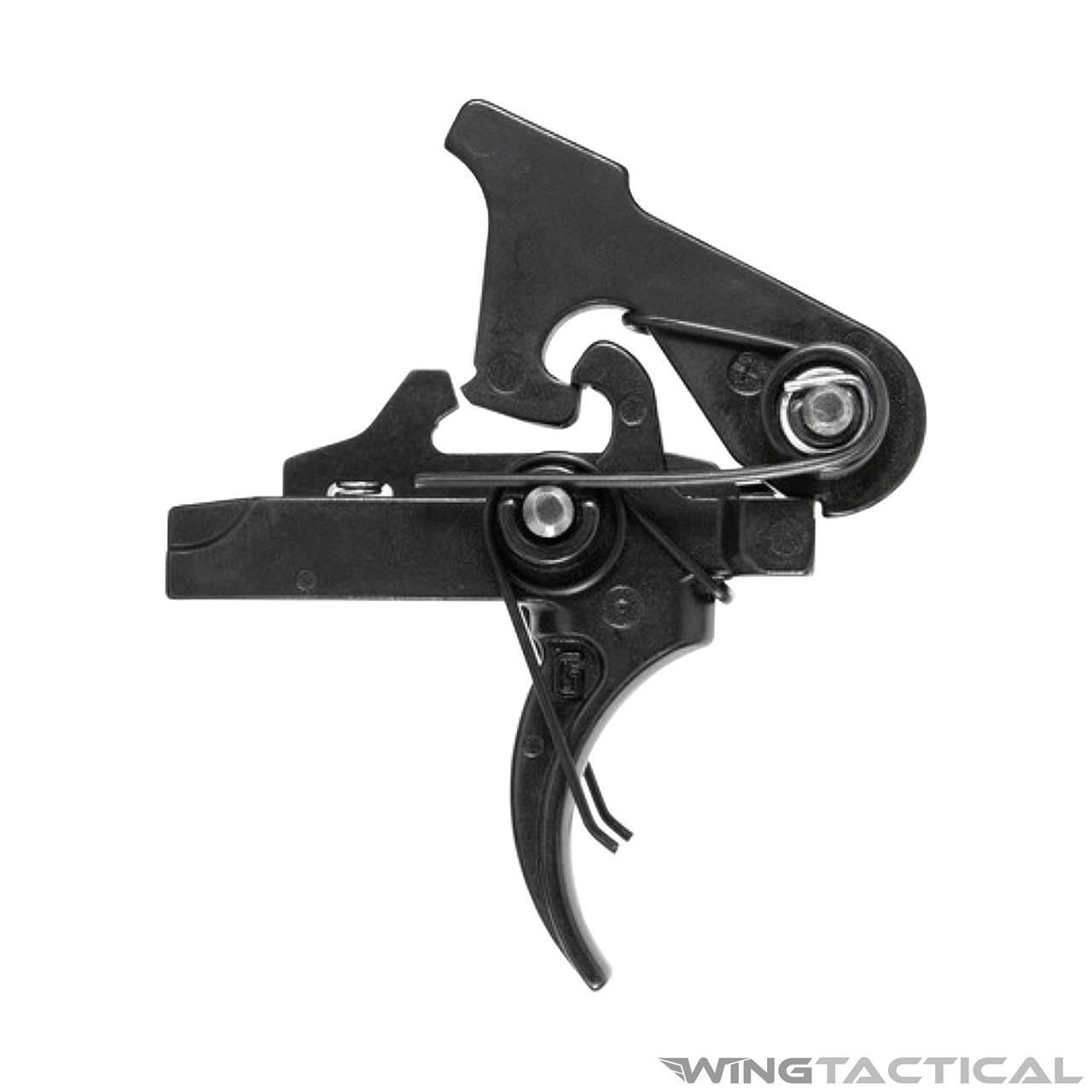
2-Stage Triggers
The 2-stage trigger is a more classic design that stretches the trigger pull weight over two stages. This means there is some “slack” in the trigger before it hits a wall. This slack prestages some of the trigger’s weight, making the final wall feel lighter than a single-stage trigger.
An example of this would be a 5-pound trigger having an initial load of 3 pounds and a final wall of 2 pounds. This would feel lighter than a 4.5-pound single-stage trigger.
The extra slack builds in a safety margin where the process of firing can be stopped more easily. This is good for those higher stress situations where the situation can change in an instant.
2-stage benefits:
- More trigger take up
- Wider safety margin
- Lower felt trigger weight
Trigger Styles
Triggers come in two profiles: curved and flat. A curved trigger and a flat trigger do have a number of benefits beyond looking different.
Curved triggers have more surface contact, which means that there is less of a chance for a hot spot to develop on the finger. The curve naturally guides the finger into the perfect position on the trigger, which makes it comfortable for most shooters.
Flat triggers offer consistent trigger pulls due to their straight back nature. This makes the trigger more consistent and, when paired with lower pull weights, produces faster speeds. A flat trigger is more likely to be found on a competition gun where split times matter.
Trigger Style Benefits:
| Curved Trigger Benefits |
|
| Flat Trigger Benefits |
|
Aesthetics
Never underestimate how much someone wants a good-looking rifle. A good-looking rifle will get more attention, and people like to make things their own. Changing a trigger to something that looks better to them is a real factor that people have to contend with.
As long as you are not sacrificing performance for looks, getting a better-looking trigger should not be discounted. Whether that is a different trigger style or just a different coloration, as long as you are happy with an aesthetic choice, you will be fine.
Should You Replace Your AR Trigger?
Like everything on your rifle, it is up to you to determine if you should replace your AR trigger or not. If you want a different design, a lighter trigger pull, or a different trigger style, you should replace your trigger with a quality alternative.
If you are in the market for accessories and upgrades for your AR-15, feel free to check out our wide selection of AR parts. Alternatively, if you need guidance for your next build, use our contact us page. Our experts are willing to help you as best they can.
Frequently Asked Questions
Is a Single-Stage trigger or a Two-Stage trigger better?
Both trigger options come down to personal preference. Single-stage triggers are often favored by competition shooters, while two-stage triggers are often used for hunting, self-defense, and some professional uses.
Can I replace an AR-15 trigger myself?
Yes. You can replace an AR trigger yourself. The process can be easy if you are using a cassette-style/drop-in trigger group or harder if you use a standard trigger group. If you are not confident in your skills, having the trigger replaced by a competent gunsmith is recommended.
What is the best trigger pull weight?
There is no “best trigger weight,” but there are broad preferences for specific tasks. Mil-spec trigger weights range from 5.5 to 8.5 lbs and are often used in high-stress environments. Other triggers are often lighter, with pull weights ranging from 3 to 4.5 lbs in competition and some precision triggers.
Do I need to upgrade my Mis-spec trigger?
You only need to upgrade your mil-spec trigger if the performance or parts quality do not match your needs. For most end users, a trigger upgrade is nice to have but not necessary. If you are getting into competition, you should train under a timer to see if your current trigger is hampering you or not.